
Why Online Glasses Go Wrong — An Optometrist Explains
By Eddie Coyle, GOC-registered optometrist
Let's start with an uncomfortable truth online prescription glasses often work fine. For a significant portion of wearers, low prescriptions, simple single-vision lenses, frames that happen to sit well on their face, the experience is perfectly acceptable.
The price is lower. The convenience is real. I'm not going to pretend otherwise.
But "often fine" and "reliably correct" are different things. And when online glasses go wrong, they go wrong in ways that are genuinely hard to diagnose without clinical training. Wearers frequently blame themselves, assume they need time to adjust, that their eyes are tired, that maybe they need a new prescription. In many cases, the problem isn't the prescription at all.
This is what actually goes wrong, and why.
The five real failure points
Pupillary distance measured badly
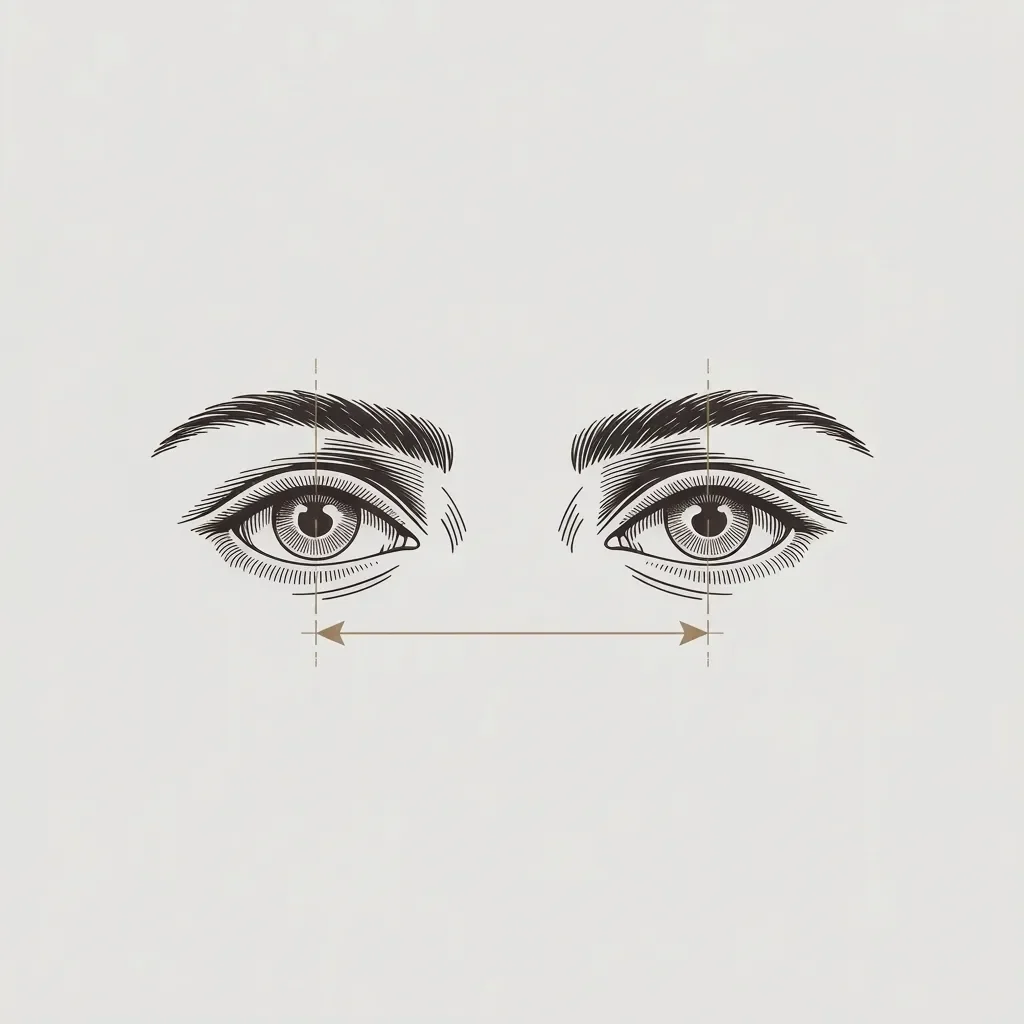
Your pupillary distance (PD) is the measurement from the centre of one pupil to the centre of the other. It determines where on each lens your eye actually looks through. Get it wrong by 2–3mm and the optical centres of your lenses are sitting in the wrong place. For low prescriptions, most people adapt. For anything above ±3.00D, or for anyone with astigmatism, even a small PD error creates prismatic imbalance — your eyes are constantly working to compensate for a lens that's pulling them slightly in the wrong direction. The symptom is usually headaches, eye strain, or a vague feeling that something is off. It's almost never attributed to PD measurement error by the wearer.
Centration in the frame — a different problem entirely
PD is only one half of the centration equation. The other is fitting height , where the optical centre of the lens sits vertically within the frame. This is specific to the frame you're ordering, the position it sits on your face, and your prescription type. For varifocals, centration errors are catastrophic — the progressive corridor is in the wrong position entirely. For single-vision lenses, it matters more than most people realise. Online ordering rarely captures this because it requires someone to actually mark the lens position on a frame sitting on your face.
Vertex distance — close enough rarely is
Vertex distance is the gap between the back of the lens and the front of your eye. Your prescription is written for a standard vertex distance. As prescriptions increase in power, even small changes in vertex distance change the effective power of the lens reaching your eye. A frame that sits slightly further from your face than the test frame used during your eye examination can mean you're effectively wearing a slightly different prescription. Most people never know. Their brain compensates partially and they live with marginally suboptimal vision.
No clinical override
An experienced optometrist or dispensing optician will sometimes modify what they dispense. A prescription that tests well in the chair doesn't always translate directly into a wearable lens, particularly for first-time varifocal wearers, significant prescription changes, or complex astigmatism corrections. There's clinical judgement involved in adapting the prescription to the patient and the frame. Online, there is no such filter. The numbers go in; the glasses come out.
Frame geometry you can't evaluate from a screen
Wrap angle, pantoscopic tilt, frame width relative to face width, these aren't aesthetic considerations. They directly affect how the lens performs. A frame that wraps further around the face than the standard dispense position changes the effective axis of an astigmatic correction. You can't evaluate this from a product image.
The PD problem in detail, and how to handle it
This is worth its own section because measuring your own PD is simultaneously the most important thing you need to get right when ordering online, and one of the more awkward practical tasks you'll ever undertake in your bathroom.
The ruler method (with a friend)
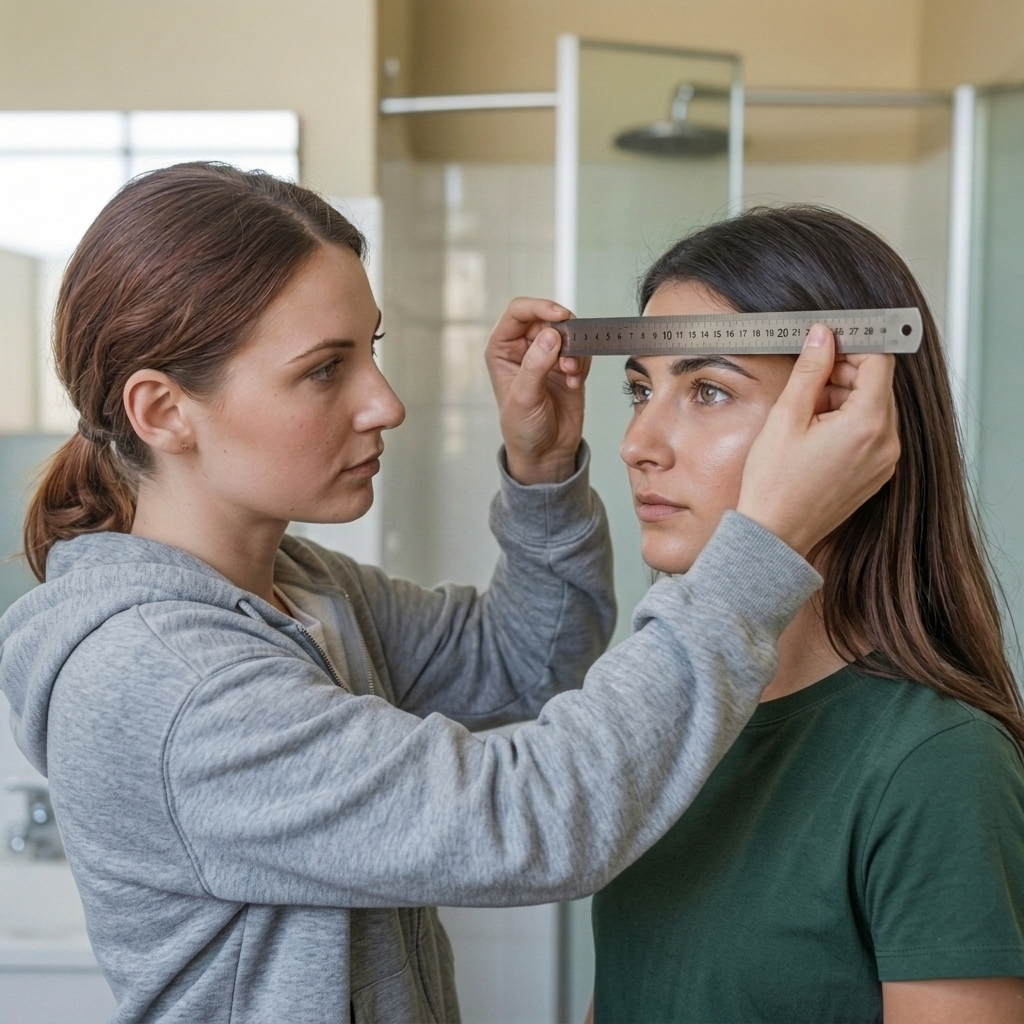
The gold standard DIY approach: stand in front of a mirror, have a friend hold a millimetre ruler flat across your nose, and measure from pupil to pupil while looking straight ahead. Simple in theory. In practice: the person measuring tends to move, you tend to look at them rather than the mirror, the ruler doesn't stay level, and neither of you is entirely sure exactly where "the centre of the pupil" is when you're looking at a slightly squinting face from six inches away. It helps to measure three times and average the result. It also helps if your friend is calm, has good close-up vision, and doesn't mind you standing slightly too close to them for longer than feels normal.

Solo mirror method
Hold the ruler yourself, look straight into the mirror (not at the ruler), and measure. This requires either very good peripheral vision, a photograph, or significant trial and error. Most people end up slightly cross-eyed trying to read the measurement at the same time as maintaining straight-ahead gaze. The results are variable.

PD measurement apps
Several apps now offer PD measurement using your phone's front camera — and when they work, they're genuinely useful. The accuracy varies considerably depending on your phone model, lighting, and how still you can hold your head. Some require a standard card held against your face for calibration. The better ones (we use one at Luxforde) are reasonably accurate for straightforward single-vision prescriptions. Where they tend to struggle: darker skin tones where pupil contrast against the iris is lower, very dark eyes, and any situation where the lighting is uneven or the camera angle is slightly off. Not unusable — but worth treating with appropriate scepticism for higher prescriptions.
More creative approaches people actually try
Some people photograph themselves with a ruler held at forehead level (surprisingly reasonable if the photo is square-on and well-lit). Some use their old glasses as a reference — placing them flat on a ruler and measuring the distance between the optical centres, which are sometimes marked by a faint dot or cross on the lens. A few people hold a ruler in their teeth. One patient of mine measured using a playing card as a fixed reference and worked it out geometrically. I can neither confirm nor deny whether this worked.
When to stop and ask your optometrist
If your prescription is above ±3.00D sphere, has significant astigmatism (cylinder above 1.50D), or you're ordering varifocals — don't struggle with home measurement. The consequences of a 2mm error are too significant and too uncomfortable to justify the saving.
The awkward part: asking your optometrist for your PD, particularly if you've recently had an eye test elsewhere and you're clearly not buying glasses there. Most practices will provide the measurement if asked, though some may charge a small fee (typically £5–£15) since it does require a member of staff and a few minutes of time. That's entirely reasonable. It's also worth asking at the time of your eye test — "Can I have my PD as well?" — before anyone realises you're considering buying elsewhere. This is not a deceptive move. It's your clinical information. You're entitled to it.
What this means in practice
None of this is an argument against ever buying glasses online. It's an argument for understanding exactly what you're taking on when you do.
For a simple prescription under ±2.00D with no significant astigmatism, a reasonable PD measurement, and a frame that doesn't require precise fitting? Online dispensing is a defensible choice and the savings are real.
For anything more complex higher powers, varifocals, significant astigmatism, post-surgical eyes, or anyone who has previously struggled to adapt to new glasses the failure risk is high enough that the saving starts to look less compelling. The clinical overhead exists for a reason.
The best online optical models acknowledge this. They build in clinical touchpoints where the prescription complexity warrants it, rather than treating every order as identical input to a production process. That's not the current norm. It should be.
Eddie Coyle is a GOC-registered optometrist and the founder of Luxforde Eyewear a direct-to-consumer prescription eyewear brand built around clinical dispensing accuracy.
How to Choose a Frame for Your Face Shape — The Honest Guide
Most face shape guides tell you oval faces suit everything and leave it at that. Here's a more useful version — one that accounts for how glasses actually sit on a real face.
Why Most Face Shape Guides Fall Short
The standard advice you'll find online sorts faces into four or five geometric categories — oval, round, square, heart — and assigns a frame shape to each. It's tidy, it's repeatable, and it's largely useless in practice.
Real faces don't sort cleanly into categories. More importantly, frame choice isn't just about face shape. It's about where your features sit, how prominent they are, what your colouring is, and what the glasses need to do — whether that's correct a strong prescription, accommodate a wide pupillary distance, or simply work with how you dress. A frame that looks right on a model with your approximate face shape may look completely wrong on you, for reasons that have nothing to do with geometry.
This guide won't tell you what shape you are. It will give you a framework for thinking about what actually works — and what to look for when you're in front of a mirror.
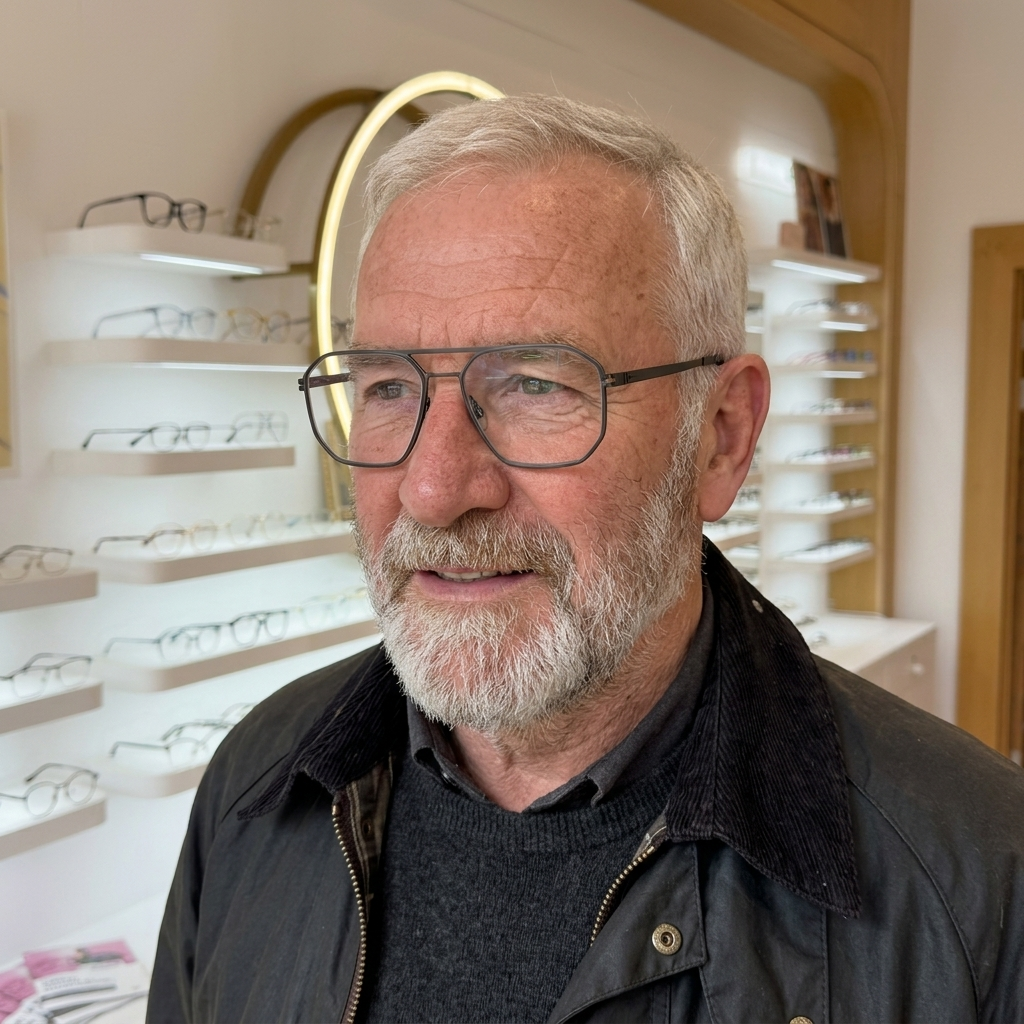
Going by the book
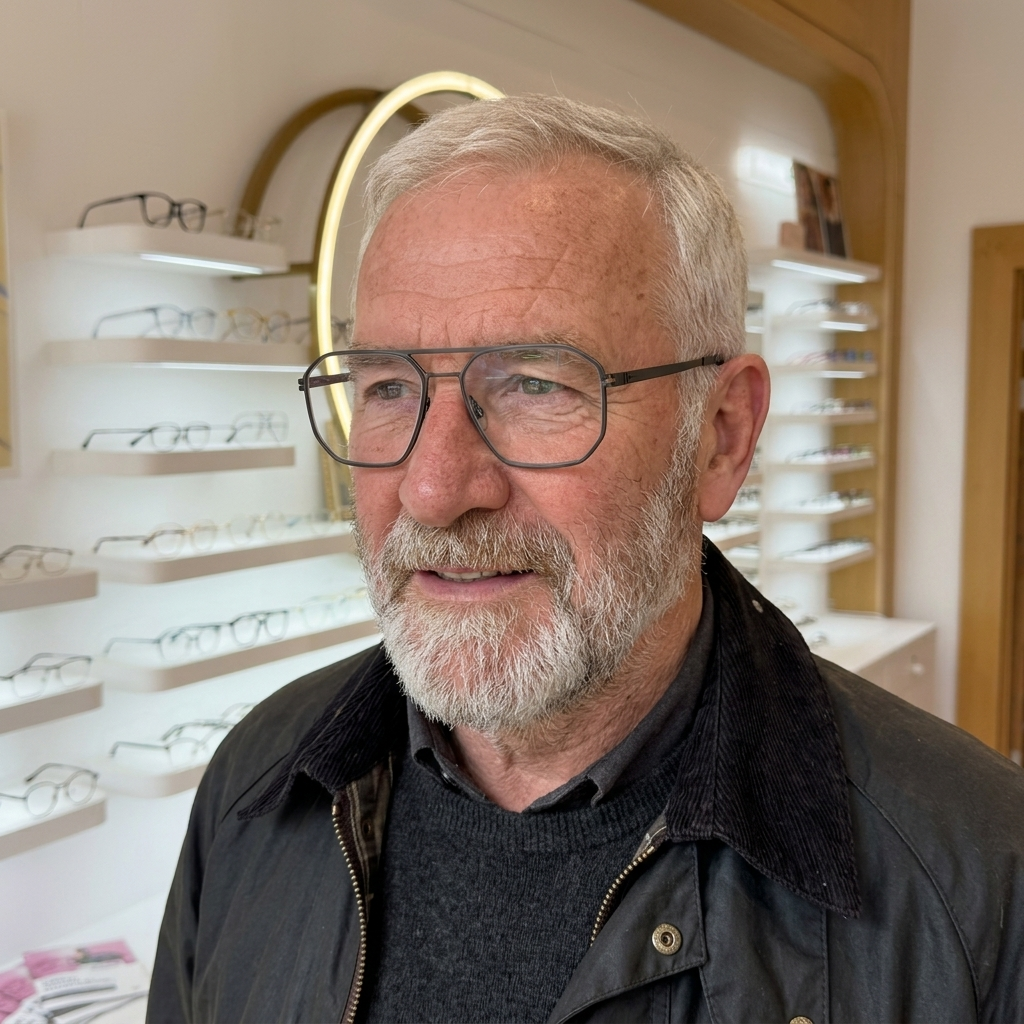
Classic aviator on a mature male face with angular features. The frame suits him perfectly, proportions are right, colour is neutral. There's nothing wrong with it, but it's exactly what a face shape guide would recommend.
Start With Proportion, Not Shape
The most useful single principle in frame selection is contrast and balance. Glasses that work tend to contrast with the dominant lines of your face rather than repeat them.
If your face has strong angular features — a defined jaw, sharp cheekbones, a wide forehead — a frame with some curve softens the overall impression. If your face is naturally soft and rounded, a frame with some structure and straight lines adds definition.
This isn't a rigid rule. But it's a more reliable starting point than trying to identify whether your jawline is "square" or "oblong."
Key proportions to consider
The frame width should broadly match your face width at the temples. A frame that sits significantly narrower than your face will look pinched; one that's much wider will overpower your features. This is one area where an actual fitting — rather than ordering online — makes a real difference. We can see immediately whether a frame sits correctly or fights your face.
The depth of the frame (the vertical measurement) affects how much of your face the glasses occupy. A deeper frame draws more attention to the glasses themselves; a shallower one is more discreet. Neither is wrong, but it's worth being deliberate about which effect you want.
The Features That Matter More Than Face Shape
Nose bridge The fit of the bridge is the single most important factor in whether glasses are comfortable long-term. A bridge that sits too high or too low will shift the optical centre of the lens away from your pupil — the same problem as an incorrect PD, with similar consequences for visual comfort. Beyond comfort, the bridge position affects how the glasses appear on your face. A higher bridge tends to make the nose appear shorter; a lower one has the opposite effect. Adjustable nose pads offer more flexibility than fixed saddle bridges, particularly for flatter nose profiles.
Brow line The top of the frame should ideally sit close to — or just below — your natural brow line. A frame that sits significantly above the brow creates an awkward gap; one that covers the brow entirely tends to look heavy and mask the face. Browline frames — with a thicker upper rim and minimal lower rim — work well precisely because they echo the natural brow, adding definition without concealing it.
Eye position within the frame Your pupil should sit roughly in the centre of the lens, both horizontally and vertically. If your eye sits too close to the top or bottom of the frame, or off to one side, the lens proportions aren't right for your face. This is something an experienced dispensing optician will assess at fitting — it's not something you can reliably judge from a photograph or an online try-on tool.
Prescription and Frame Choice: The Practical Constraints
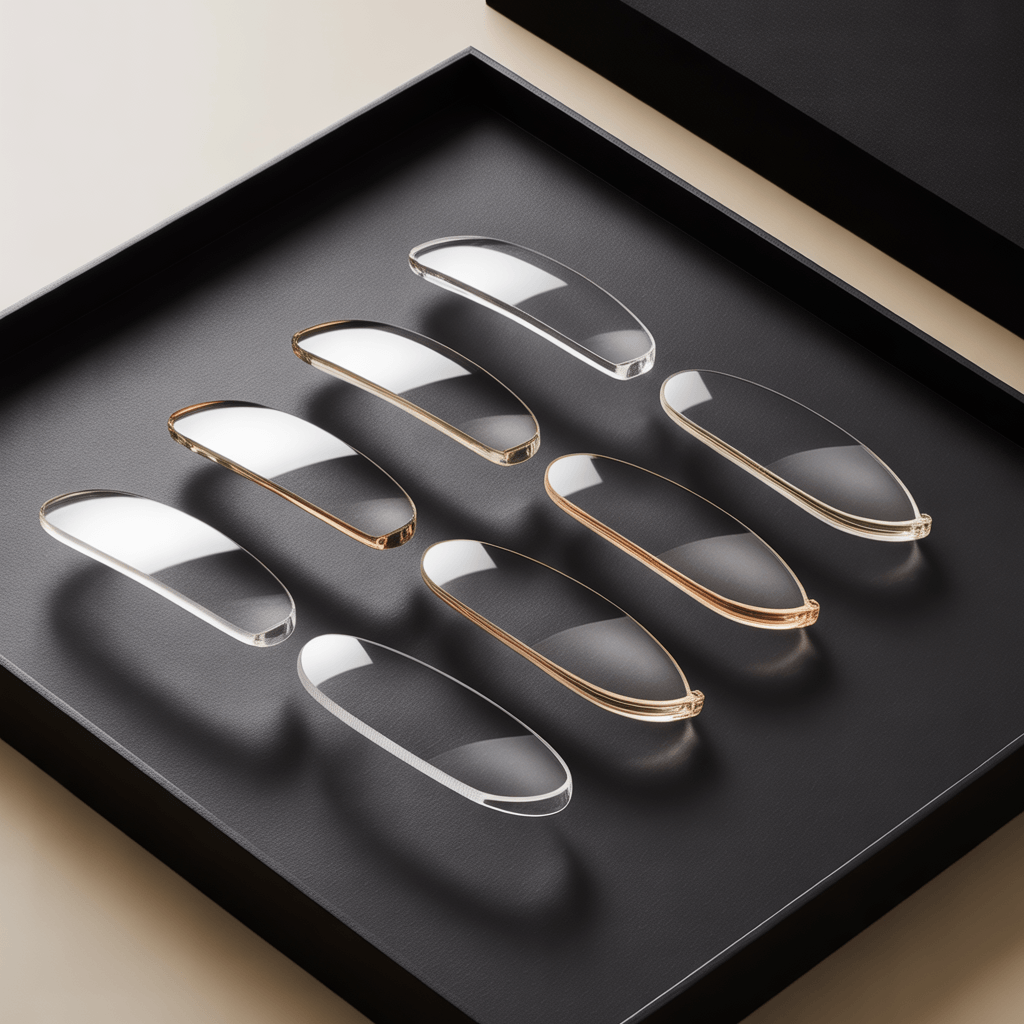
Start with lenses.
For moderate to strong prescriptions, frame choice isn't just aesthetic — it has a direct effect on how your lenses look and how well they perform.
Lens thickness and frame size For higher minus (myopic) prescriptions, the edges of the lens are thicker than the centre. A larger frame means more lens area, which means more visible edge thickness. Smaller frames — particularly those with a well-centred fit — will always produce a better aesthetic result in a strong prescription than a large fashion frame in the same index material. This is something we calculate at the point of dispensing: we can show you the predicted edge thickness in different frame sizes before you commit.
Strong prescriptions and frame style Full-rim frames conceal the lens edge entirely and are almost always the better choice for stronger prescriptions. Semi-rimless and rimless styles expose the lens edge, which becomes increasingly conspicuous as prescription strength increases. If you love the aesthetic of a rimless frame but have a significant prescription, it's worth having an honest conversation with your optician about the trade-offs before you order.
Astigmatism and lens rotation For significant cylinder corrections, lens orientation within the frame is critical. Rimless and drill-mounted frames offer less structural support, which can allow lenses to rotate slightly over time — enough to affect vision. Full-rim frames hold the lens more securely in its correct orientation.
Colour and Material
Frame colour and skin tone Warm skin tones — yellow, olive, or peachy undertones — tend to be complemented by warmer frame colours: tortoiseshell, gold, warm browns, olive greens. Cooler skin tones — pink or bluish undertones — suit cooler frames: silver, black, grey, cool blues and purples. This isn't absolute, and contrast can be used deliberately — a strong black frame on a warm complexion makes a statement rather than a mistake. But it's a useful starting framework when you're unsure.
Hair and eye colour Frames that pick up a colour present elsewhere in your appearance — a shade in your hair, or a complementary to your eye colour — tend to look more considered than purely contrasting choices. Again, this is a starting point, not a rule.
Material Acetate frames offer the widest range of colour and pattern, hold their shape well, and feel substantial on the face. Metal frames are lighter and more minimal, with a more precise, engineered aesthetic. Titanium sits at the premium end of metal — exceptionally light, hypoallergenic, and durable. If you've had issues with frame weight or skin sensitivity previously, it's worth discussing material as part of the selection process.
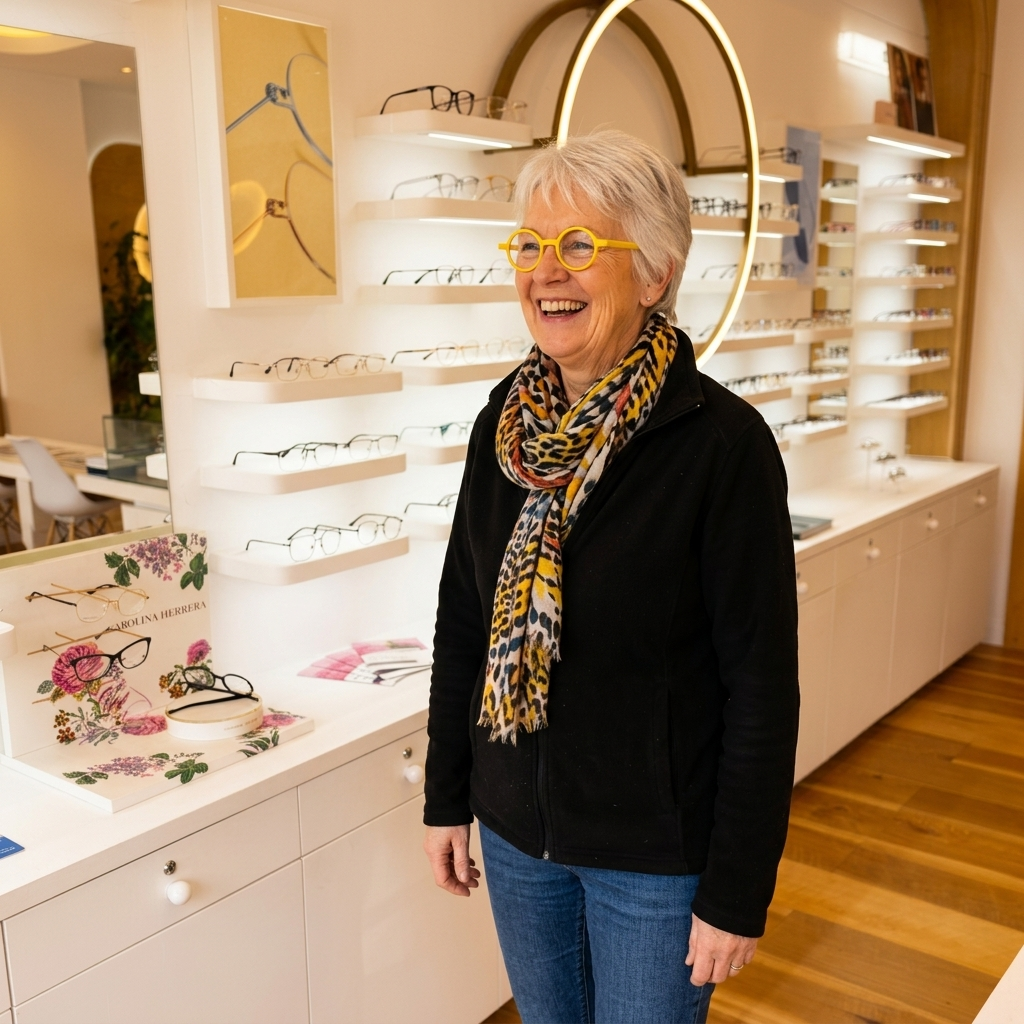
Clever contrast
Conventional guides would push her toward something more structured and neutral. Instead it's playful, bold, and completely right on her. Great example of colour and shape confidence overriding the generic advice.
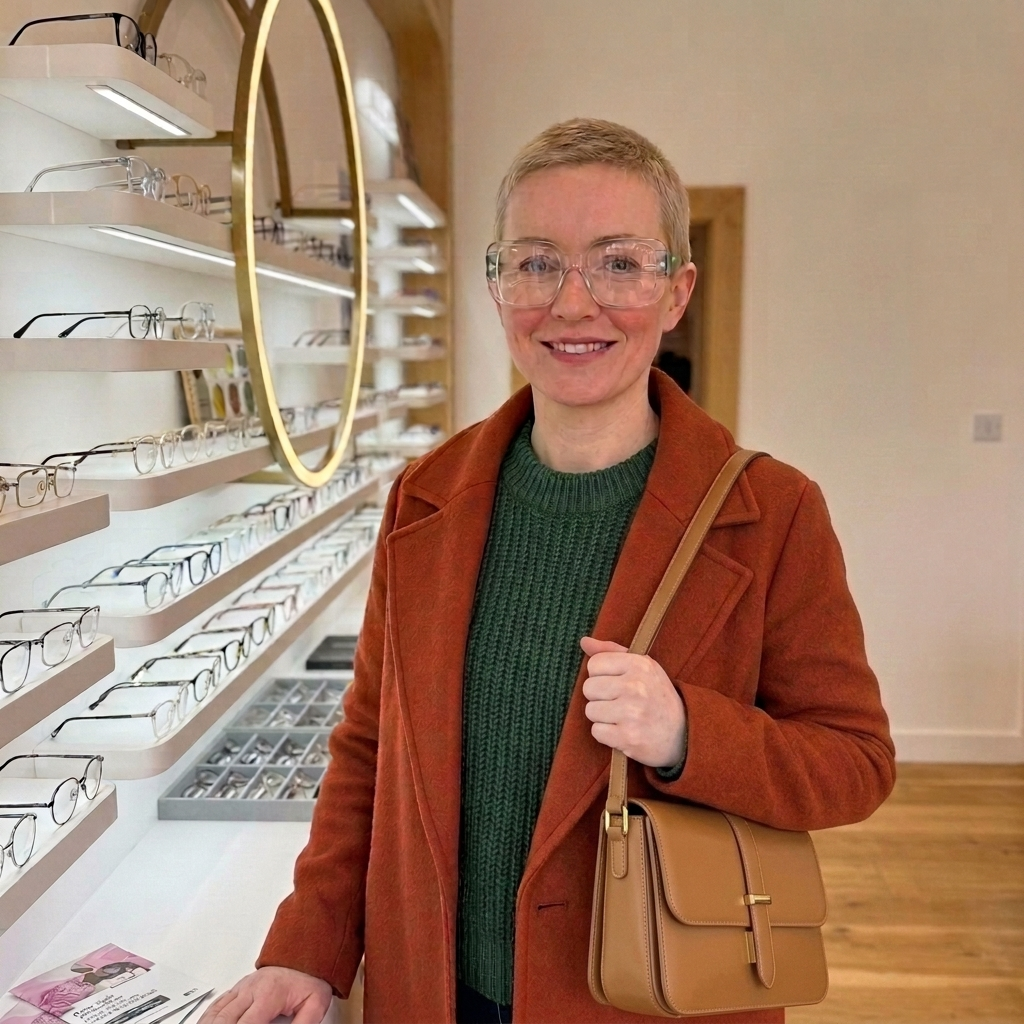
Make it stand out
Conventional guides would typically steer away from on that face shape. It works precisely because of the contrast principle — bold frame, strong face, confident result. Perfect for illustrating that the "rules" are limiting.
The Limitations of Online Try-On Tools
Virtual try-on technology has improved significantly, and for a general sense of how a frame sits on your face it's a reasonable starting point. But it has real limitations for anything beyond the most basic assessment.
It cannot account for how a frame actually sits — the angle, the nose bridge fit, the position of the lens relative to your pupil. It cannot reflect the weight of the frame or how it distributes across your ears and nose over several hours. And it cannot show you how the lenses will look once your prescription is glazed into the frame.
For everyday frames with a moderate prescription, online selection is increasingly viable if you know your PD, know your prescription, and understand what you're looking for. For varifocals, strong prescriptions, or your primary pair of glasses, an in-person fitting with an experienced dispensing optician is still the clearest route to a result you'll actually wear comfortably every day.
What to Expect From a Frame Consultation at Eddie Coyle Optometrists
When you come in for a frame fitting, we're not simply handing you styles to try. We're looking at where the frame sits relative to your pupil, how the bridge fits your nose, whether the temple length is correct, and how the frame interacts with your prescription. For stronger prescriptions we'll run the lens thickness calculations in different frame sizes so you can make an informed decision before you commit.
It takes longer than picking something off a shelf. It produces a result you'll be happy with for the next two years.
Both our Dennistoun and Cambuslang practices offer frame consultations as part of any dispensing appointment. If you'd like advice before committing to a frame — or you're not sure where to start — come in and we'll take it from there.
Eddie Coyle is a GOC-registered optometrist and founder of Eddie Coyle Optometrists, with practices in Dennistoun and Cambuslang, Glasgow.
The Free Hi-Index Upgrade: A Good Deal, or a Low Quality Signal?
Across the online eyewear market, free hi-index upgrades have become a frequent promotional promise. Before you accept one, it is worth understanding what the index number actually tells you — and what it doesn't.
If you have a stronger prescription, you have almost certainly encountered the hi-index upgrade. Advertised across budget optical retailers and direct-to-consumer eyewear brands alike, it presents as straightforwardly generous: thinner, lighter lenses at no extra cost. It sounds like the kind of decision that makes itself.
The reality is more considered. A hi-index lens is not a single product. It is a category — one that spans an enormous range of manufacturing quality, optical performance, and long-term wearability. The index number tells you about thickness. It tells you almost nothing about the quality of the glass going into your frame.
Understanding the difference is not a niche concern for optical specialists. It is the kind of knowledge that should inform any significant purchase involving your vision.
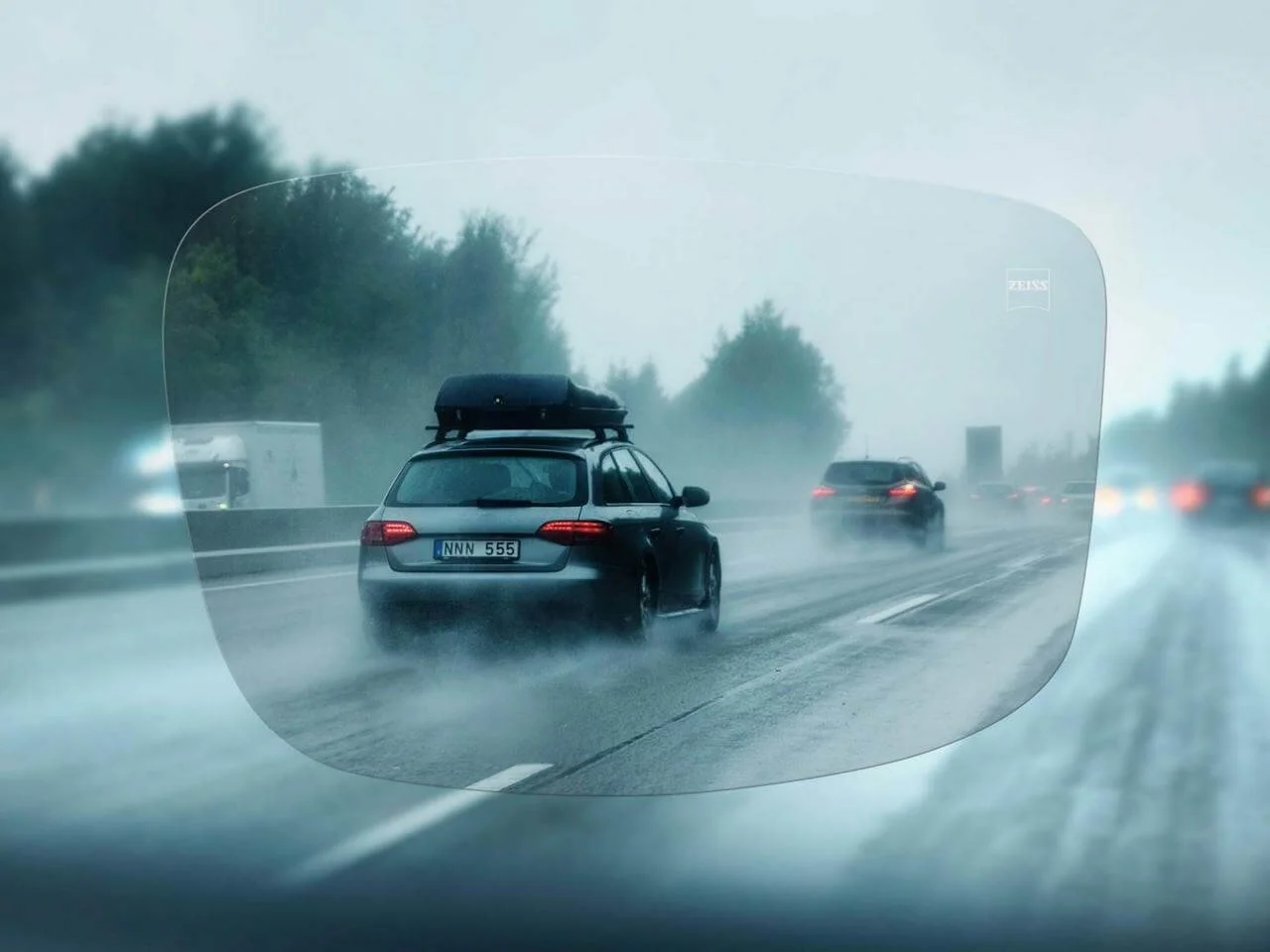
Optical precision matters most when conditions are demanding. Through a premium lens, detail remains sharp and contrast is preserved — wet roads, distant brake lights, lane markings all rendered clearly. This is the practical difference between a lens engineered for visual performance and one manufactured to a price.
What the refractive index actually measures
The refractive index of a lens material describes how efficiently it bends light. Standard ophthalmic lenses — CR-39 plastic — carry an index of around 1.50. For moderate prescriptions, this material performs excellently. It is optically stable, well-understood, and has decades of clinical use behind it.
As prescription power increases — typically above ±4.00 diopters — a 1.50 index lens becomes visibly thick at the edges, adding unwanted weight and limiting compatible frame styles. Higher-index materials (1.60, 1.67, 1.74) bend light more efficiently, producing a thinner profile for equivalent prescription power.
This is the value proposition of hi-index: geometry. A thinner lens. What the index number does not convey is anything about the optical clarity, surface precision, coating durability, or chromatic performance of the lens behind that number.
The number nobody mentions: Abbe value
There is a property of optical lenses that receives almost no attention in consumer eyewear marketing, yet has a direct and measurable effect on visual quality. It is called the Abbe value, and it describes the degree to which a lens material separates white light into its component colours — a phenomenon known as chromatic aberration.
A lower Abbe value means more chromatic aberration: colour fringing, reduced sharpness toward the periphery of the lens, and visual fatigue over extended wear. A higher Abbe value means cleaner, more precise optics.
Here is the complication: as refractive index increases, Abbe value decreases. This is a fundamental property of optical physics, not a manufacturing flaw. A 1.74 lens is inherently more prone to chromatic aberration than a 1.50 lens — regardless of who made it.
What separates a premium hi-index lens from a budget one is the degree to which the manufacturer mitigates this through precision surface design, material purity, and advanced anti-reflective coating. These are things that cost money to produce. They are also the things most likely to be absent from a lens that is being given away.

Chromatic aberration occurs when a lens fails to focus all wavelengths of light to the same point. At higher refractive indices, this effect intensifies — making manufacturing precision the critical variable between a lens that manages it and one that doesn't.
Why priced-in hi-index is a quality signal in reverse
Lenses have a manufacturing cost. That cost does not disappear when a brand chooses not to pass it on. It is absorbed somewhere — in the headline frame price, in the overall business margin, or most commonly, in the specification of the lens itself.
The hi-index lenses that can be offered at zero additional cost are sourced from unbranded manufacturers at a wholesale price that makes the commercial model work. They meet the minimum regulatory standards required for ophthalmic use. They are not the same product as a precision-manufactured lens from one of the major optical houses — Zeiss, Hoya, Essilor, Rodenstock — who have spent decades developing materials, coatings, and surface geometries that genuinely improve visual outcomes.
A free upgrade, in this context, is not generosity. It is a pricing decision. The question worth asking is not "am I getting something for nothing?" but rather "what tier of product is this upgrade actually coming from?"
When a premium lens is priced into a product properly — at a charge that reflects the actual cost of producing it — that is a more honest transaction than a headline price that conceals a lens quality compromise. A modest, transparent charge for a genuine upgrade is not a worse deal. It is a clearer one.
Two lenses can share an index number and have almost nothing else in common. The index is the beginning of the specification, not the end of it.
Select any lens material above to view detail. Thickness is relative to CR-39 at ±4.00D. Higher Abbe value = less chromatic aberration.
The coating problem
Lens quality does not begin and end with the substrate. The coatings applied to an ophthalmic lens have a significant and lasting effect on how it performs in real-world use.
Anti-reflective coating, applied to virtually all modern lenses, varies enormously in quality. A premium AR coating reduces glare under artificial lighting, improves contrast and colour accuracy, resists smearing and debris, and remains optically clear for years of daily use. A budget AR coating may perform adequately when new and degrade noticeably within twelve months — becoming difficult to clean, prone to haziness, and contributing to visual fatigue.
Scratch resistance coatings, hydrophobic treatments, and UV blocking show similar variation. These are the layers between your prescription and your daily experience of wearing the lens. They are also the layers least likely to be specified clearly in a brand's marketing.

Visible coating degradation on a budget hi-index lens — rainbow iridescence, surface hazing, and moisture beading indicate a failing anti-reflective treatment. This is not a lens that has been misused. This is what a low-grade AR coating looks like under normal daily wear.
Questions worth asking before you accept a lens upgrade
01Who manufactures the lens? There are a small number of premium optical manufacturers with independently verifiable quality standards. If a brand cannot name the manufacturer, the lens is almost certainly unbranded stock.
02What is the Abbe value of the lens being offered? A brand confident in its optical quality will have this figure available. One that cannot provide it likely does not know — which is itself informative.
03What AR coating is included, and who makes it? Premium coatings from optical manufacturers are specified products with known performance characteristics. Generic coatings are not.
04Is the upgrade appropriate for your prescription? Not every prescription requires hi-index. An honest retailer should be able to tell you whether the upgrade is clinically beneficial for your specific prescription, or simply cosmetic.
The case for paying a little more
There is a version of the online eyewear proposition that works precisely because it is transparent: premium optical components, honestly priced, with a clear explanation of what you are paying for and why. This is a fundamentally different model from one that buries lens quality in a headline price or absorbs it into a "free" upgrade.
For a moderate prescription — say, below ±3.00 — the difference between a budget and premium hi-index lens may be imperceptible in daily wear. For a stronger prescription, worn for eight or more hours a day, the optical performance of the lens substrate and the durability of its coatings are not marginal considerations. They are the product.
Thinner lenses are worth having. Thinner lenses from a manufacturer that understands optics and invests in the precision to produce them correctly are worth paying a considered amount for. The free upgrade that obscures what you are actually receiving is the less transparent offer, not the more generous one.
"The index number tells you about thickness. The manufacturer tells you about quality.
Only one of those matters to your vision."
Eddie Coyle
At Eddie Coyle Optometrists, our lens upgrade is priced.
It is priced because the lenses we use are made by Zeiss, and Zeiss lenses cost what they cost to produce. We
absorb part of that cost — but we will not replace the lens with something cheaper to make the number disappear. We think that is the more honest position, and we think you deserve to understand why.
How to Read Your Glasses Prescription
Those numbers and abbreviations on your prescription slip aren't as mysterious as they look. Here's exactly what each one means — and why it matters when choosing your next pair.
By Eddie Coyle Optometrists · Glasgow
Everything you need to order a pair of glasses.
The Slip That Confuses Everyone
You've just had your eye examination, and you're handed a small piece of paper covered in abbreviations, minus signs, and decimal numbers. If you've ever held that slip and wondered what any of it actually means, you're in excellent company — it's one of the most common questions we hear in practice. This guide will walk you through every element, line by line. Understanding your prescription isn't just satisfying — it helps you make better decisions about your eyewear, spot errors before they become problems, and have more informed conversations with your optometrist at your next visit.
OD and OS: Left Eye, Right Eye
Your prescription is divided into two rows: OD and OS. These are Latin abbreviations — oculus dexter (right eye) and oculus sinister (left eye). OD is always listed first. Some prescriptions also include OU (oculus uterque) — meaning both eyes — particularly when a value applies equally to each.
| Abbreviation | Meaning |
|---|---|
| OD | Right eye (oculus dexter) |
| OS | Left eye (oculus sinister) |
| SPH | Sphere — the main focusing correction |
| CYL | Cylinder — correction for astigmatism |
| AXIS | Direction of astigmatism (1–180°) |
| ADD | Reading addition (for bifocals / varifocals) |
| PD | Pupillary distance — not always on this slip |
Sphere (SPH): The Headline Number
The sphere value tells you the primary focusing power of the lens required. It's measured in dioptres (D) and given to two decimal places — for example, −2.25 or +1.00.
A minus (−) sign means you are myopic — short-sighted.
Objects in the distance appear blurred, and a concave (thinner at the centre) lens is used to correct this. The higher the negative number, the stronger the correction required.
A plus (+) sign means you are hyperopic — long-sighted.
Your eye has to work harder to focus at all distances, and a convex (thicker at the centre) lens is needed. It's worth noting that low levels of hyperopia are common in children and young adults, whose eyes can compensate naturally — you may only notice symptoms such as headaches or eyestrain.
If the sphere field reads Plano or 0.00, it means no spherical correction is needed in that eye — though the prescription may still include a cylinder value for astigmatism.
Cylinder (CYL) and Axis: Correcting Astigmatism
Not everyone has a cylinder value — if these fields are blank or read 'DS' (dioptre sphere), you don't have significant astigmatism. But for those who do, these two figures always appear together. Astigmatism occurs when the cornea or lens is shaped more like a rugby ball than a football — with different curvatures in different meridians. This causes light to focus unevenly, resulting in blur and distortion at all distances.
The CYL value tells the lens manufacturer how much additional power is needed in a particular direction. Like sphere, it can be negative or positive depending on the notation convention your optometrist uses (both describe the same thing — some practices use 'minus cylinder', others 'plus cylinder').
The Axis is a number between 1 and 180, representing the angle (in degrees) of the principal meridian. Without it, the cylinder correction would have no orientation — the two values are meaningless apart from each other. An axis of 180 and an axis of 90 describe astigmatism in completely different directions.
Add (Addition): For Reading and Varifocals
If you're over 40 and finding your arms aren't quite long enough to hold the menu at a comfortable reading distance, you're experiencing presbyopia — the gradual stiffening of the eye's natural lens that reduces its ability to change focus.
The ADD value corrects for this.
ADD is always a positive number (typically between +0.75 and +3.50) and is usually the same for both eyes. It represents the additional power needed on top of your distance prescription to bring near objects into focus. It's used in reading glasses, bifocals, and the near zone of varifocal lenses.

Understanding the numbers on your prescription is the first step to finding the right lenses for your lifestyle.
A Note on Pupillary Distance (PD)
Your PD — the distance in millimetres between the centres of your pupils — is essential for centring your lenses correctly within your frame.
Without an accurate PD, even a perfect prescription will cause unnecessary eye strain. PD is sometimes listed on your prescription slip, and sometimes it isn't.
Legally in the UK, optometrists are required to provide your prescription upon request, but PD is treated separately. If
you plan to order glasses online, ask your optometrist to include it — or see our dedicated guide to understanding and measuring PD.
Ready for your next eye examination?
Book online or call our Dennistoun or Cambuslang practice.
Bring any previous prescription slips — they help us track changes over time and give you a fuller picture of your eye health.
What Is PD and Why Does It Matter?
Pupillary distance is the most overlooked measurement in eyewear — and possibly the most important. Get it wrong and even a perfect prescription will make you work harder than you should. Here's what it is, how it's measured, and why you should always know yours.
By Eddie Coyle Optometrists · Glasgow
The Measurement Nobody Talks About
Your glasses prescription is a set of optical instructions. But those instructions only work if the lens is positioned correctly in front of your eye. Pupillary distance — almost always abbreviated to PD — is the measurement that makes that possible. PD is simply the distance, in millimetres, between the centre of your right pupil and the centre of your left pupil. It determines where the optical centre of each lens is positioned within the frame. The optical centre is the point on a lens that provides the clearest, most distortion-free vision — and it needs to sit directly in front of your pupil.
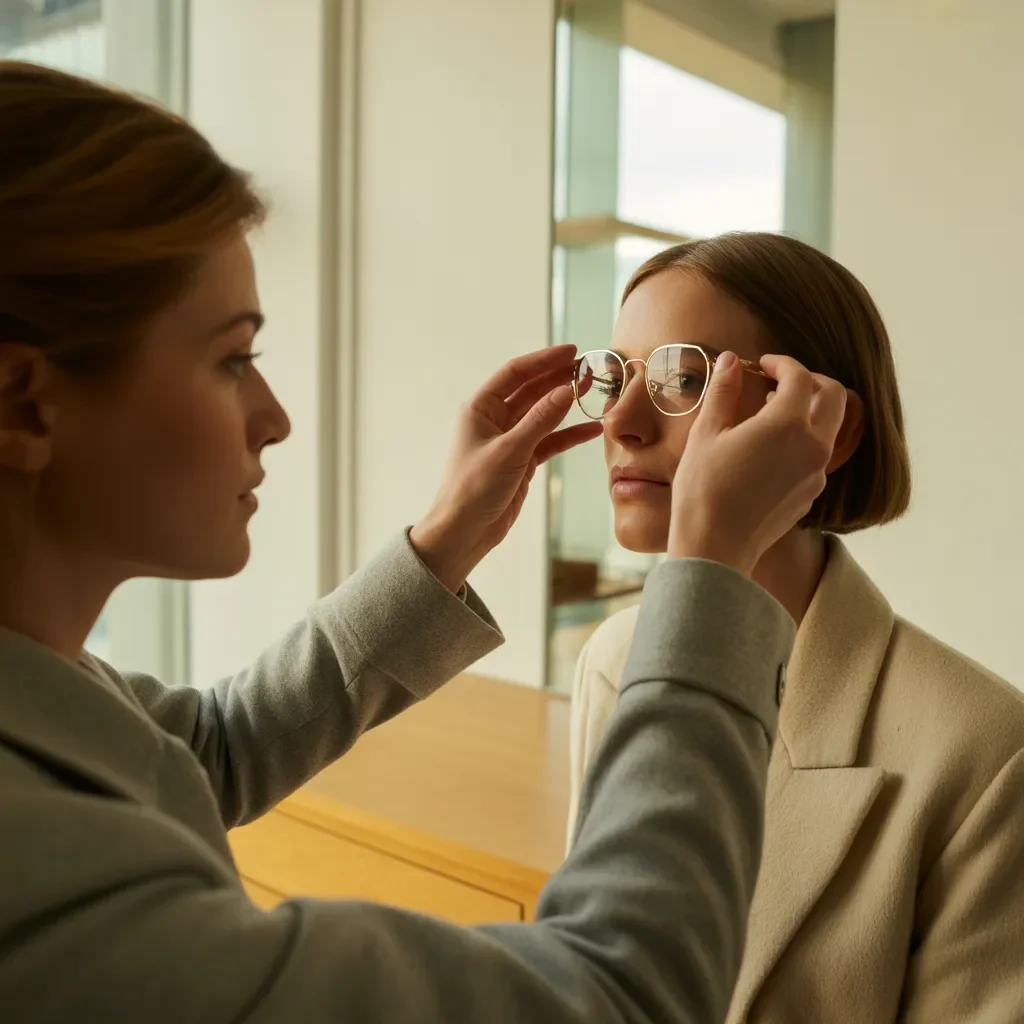
Frame size, pupillary distance and lens choice. Three variables, one goal — glasses that feel like they were made for you.
Single PD vs Dual PD
Your PD can be recorded as a single measurement (e.g., 64mm) representing the total distance across both eyes — or as two separate measurements representing each eye individually from the midpoint of the nose: e.g., 32/32mm or 33/31mm. Most faces are not perfectly symmetrical, which means the two halves of your PD are often slightly different. When ordering glasses online or using any premium online dispensing service, a dual (monocular) PD is always more accurate and always preferred.
“A lens with the optical centre 3mm off-centre is the equivalent of adding a prism to your glasses — one you never asked for.”
| Measurement | Value / Notes |
|---|---|
| Average adult PD | 60–68mm (typically 64mm) |
| Average child PD | 45–55mm (varies significantly with age) |
| Dual PD notation | Right eye / Left eye (e.g. 33/31) |
| Typical tolerance | ±1mm for distance · ±0.5mm for near/reading |
| Near vision PD | Subtract ~3mm from your distance PD (e.g. 64mm → approx. 61mm) |
What Happens If PD Is Wrong?
An incorrect PD introduces what optometrists call unwanted prism. Your eyes are sensitive instruments — when the optical centre of a lens doesn't align with your pupil, the brain has to work to compensate by rotating the eyes inward or outward. For lower prescriptions, a small PD error might go unnoticed. But as prescription strength increases, the effect becomes more significant. Common symptoms of an incorrect PD include: persistent headaches, eye strain after short periods of wear, a sense of pulling or discomfort behind the eyes, and difficulty adapting to new glasses. Many people who return new glasses reporting that they 'just don't feel right' are experiencing exactly this — and an incorrect PD is one of the first things a good dispensing optician will check.
Near Vision PD: A Separate Consideration
When you look at something close up — a book, a phone screen, a menu — your eyes naturally turn inward slightly, a movement called convergence. This means the effective PD for near tasks is smaller than for distance. For varifocal and bifocal lenses, this matters. Reading glasses typically use a PD approximately 3mm less than your distance PD (e.g., if your distance PD is 64mm, your near PD is approximately 61mm). Your optometrist will calculate this precisely when dispensing varifocals.
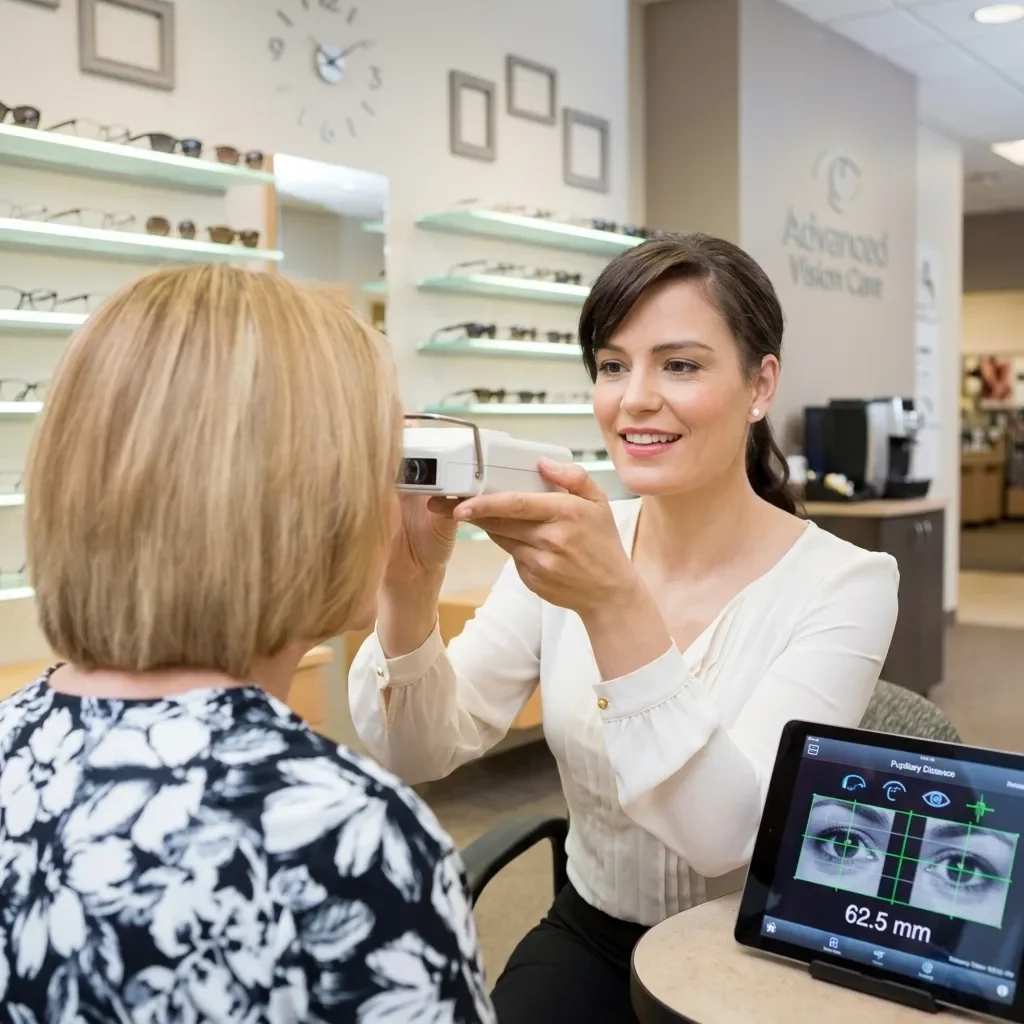
PD measurements: by hand with a ruler or using a pupillometer- both in expert hands.
Can You Measure Your Own PD?
In theory, yes — and there are apps and online tools that attempt this using your phone's front camera. In practice, self-measurement introduces errors that matter most when you can least afford them: higher prescriptions and varifocal lenses. The most reliable method is measurement by a qualified optometrist or dispensing optician using a pupillometer — a dedicated instrument designed for precisely this purpose.
At Eddie Coyle Optometrists, PD measurement is a standard part of our dispensing process and is taken at every new frame fitting.
Measuring this distance looks easy but errors can easily be generated without correct technique.
PD and Online Eyewear: What You Should Know
The rise of online eyewear has made glasses more accessible and affordable — but it has also introduced a gap in the process. Many online retailers rely on customers providing their own PD, often self-measured or estimated. If you're ordering glasses online — whether from a budget retailer or a premium brand — always obtain your PD from your optometrist before you do. You have the right to request it. Some practices include it on your prescription; others may charge a small fee for the measurement if it was not taken as part of your examination. A correctly centred pair of lenses — even at a competitive online price point — will always outperform an incorrectly centred pair at any price. The PD is the foundation on which the rest of the dispensing process is built.
Need your PD measured?
Pop into either of our Glasgow practices — Dennistoun or Cambuslang. We're happy to measure your PD as part of any eye examination appointment, and we can advise on whether your current prescription is optimally centred in your existing glasses too.
Understanding Lens Index — Which Is Right for Your Prescription?
Thinner lenses, better optics, and how to avoid paying for more than you need.
Lens index explained in plain English.
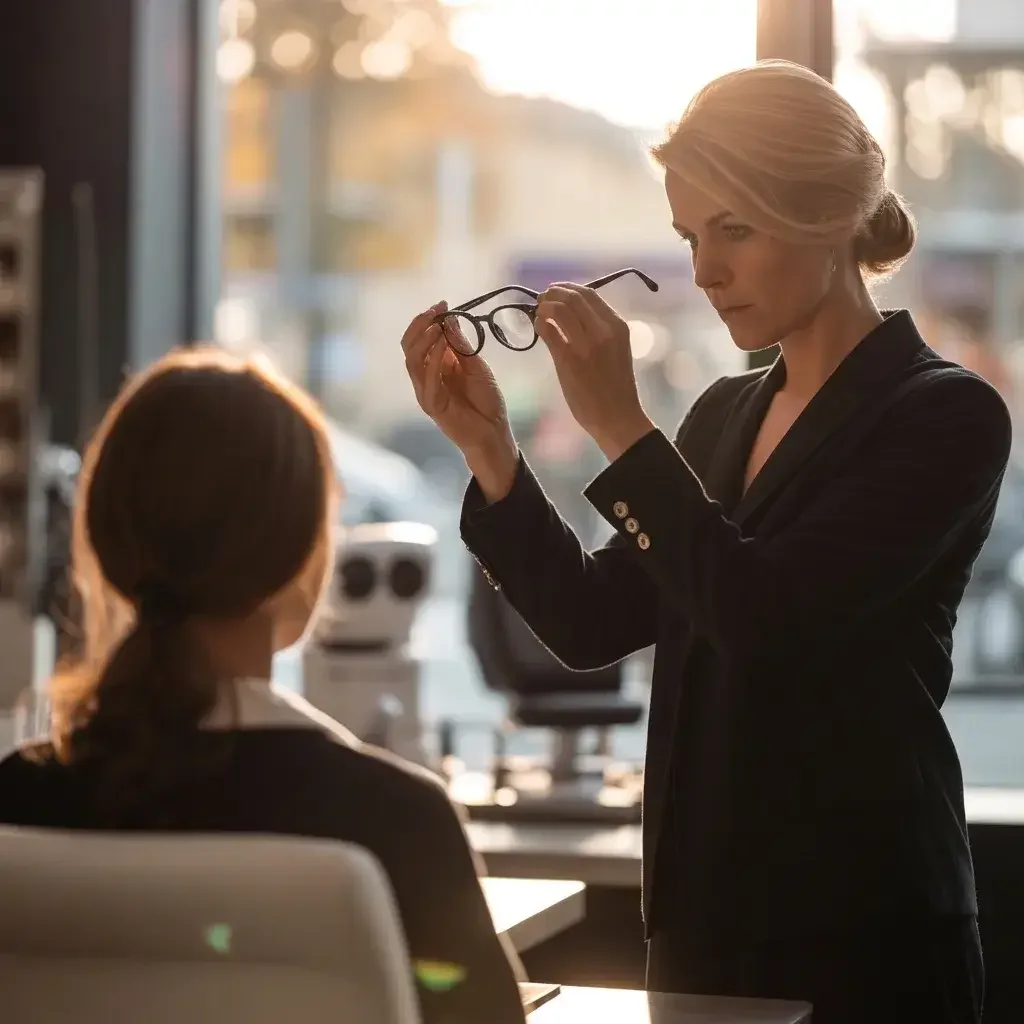
The right lens depends on your prescription, your optometrist can guide you to the best option.
Why 'Thinner Lenses' Isn't Just About Aesthetics
When you're choosing new glasses, the conversation about lens index often starts with aesthetics —
nobody wants thick lenses. But lens index affects more than how your glasses look. It influences their
weight, their optical performance in certain conditions, how well they fit specific frame styles, and yes,
their cost. Understanding it gives you the information to make the right choice rather than simply
defaulting to 'the thinnest option available.'
What Is Lens Index?
Lens index — or refractive index — is a number that describes how efficiently a material bends light. The
higher the index, the more light-bending power a given thickness of material possesses. This means a
higher-index material can deliver the same optical correction in a thinner, lighter lens than a lower-index
one.
Standard plastic lenses (CR-39) have an index of 1.50. Mid-index lenses are typically 1.56 or 1.60.
High-index lenses are 1.67 or 1.74. Each step up produces a meaningfully thinner lens — but the
relationship isn't perfectly linear, and at the extremes, higher-index materials can introduce other optical
trade-offs.
Which Index Should You Choose?
The most honest answer is: the lowest index that looks and feels acceptable in your chosen frame. There's
no benefit — optical or aesthetic — in using a 1.74 lens when your prescription would be perfectly housed
in a 1.60. You pay more, and depending on the material, you may actually get slightly lower optical clarity
in the periphery.
As a general clinical guide, here's how to think about it:
Up to ±2.00D (Low prescription)
Standard 1.50 lenses are entirely appropriate. The edge thickness or centre thickness difference will be
minimal even in larger frames. Upgrading for aesthetics is perfectly reasonable, but not clinically
necessary.
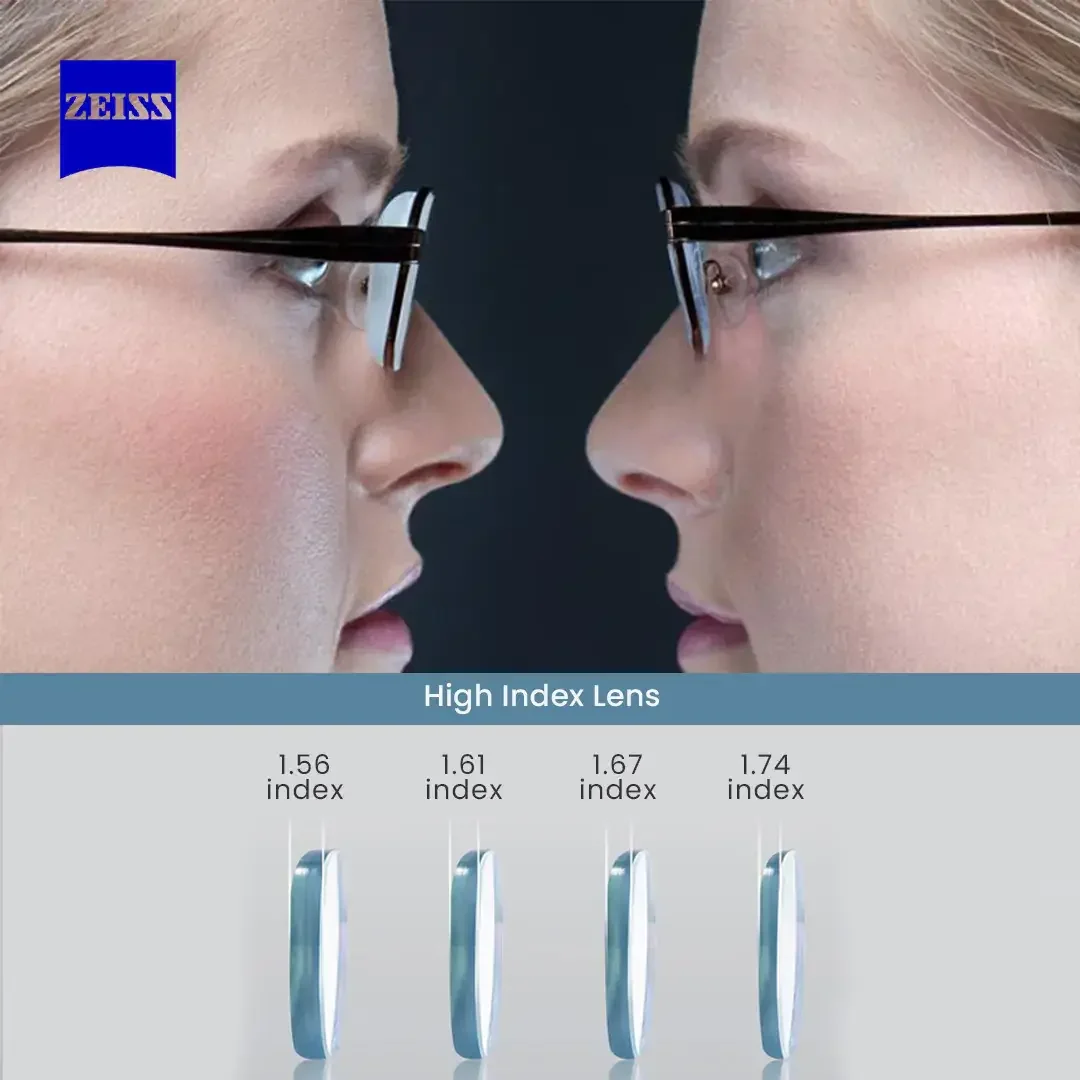
We have access to multiple lens suppliers allowing us to further optimise your lens choices.
±2.00D to ±4.00D (Moderate prescription)
This is where 1.60 index lenses start to make a meaningful difference, particularly in larger or rimless
frames. For myopes, edge thickness can become visible in wider frames at standard index. For hyperopes,
centre thickness becomes the concern. 1.60 offers a solid balance of visual performance and aesthetics at a
reasonable price.
±4.00D to ±6.00D (Higher prescription)
1.67 is typically the sweet spot here. The lens will be noticeably thinner and lighter than 1.60, which
becomes increasingly important as the prescription strengthens. Frame choice also becomes more critical
— smaller frames with a well-centred lens will always look better than a large frame in any index.
Above ±6.00D (Strong prescription)
1.74 is worth considering seriously here — particularly for myopes, where the edge thickness of a
high-minus lens can be dramatic in lower-index materials. Your dispensing optician can calculate the
predicted edge and centre thickness in different indices before you commit, which we always recommend
at this prescription level.
“Frame choice and lens centration do more for the appearanceof a strong prescription
than lens index alone — but the right index makes both work better.”
Astigmatism and Lens Index
If you have a significant cylinder correction, the lens index calculation is slightly more complex. Cylinder
lenses have different power in different meridians, which affects thickness at multiple points around the
lens edge. High-cylinder prescriptions often benefit from 1.60 or 1.67 index even at more moderate sphere
values — it's worth discussing with your optician.
Lens Coatings: The Layer on Top of Index
Lens index affects the base material — but the coatings applied to it are equally important and often more
impactful on everyday visual experience. Anti-reflection (AR) coating is arguably the most important
upgrade you can make regardless of index: it reduces glare from screens, streetlights, and oncoming
headlights, and makes your lenses look cleaner.
At Eddie Coyle Optometrists, we work with Zeiss and Hoya lenses — suppliers whose coating technology
is among the best available. Their premium AR coatings include oleophobic (smudge-resistant) and
hydrophobic layers that extend the practical life of the lens significantly. Cutting costs on coatings while
spending heavily on index is rarely the right trade-off.
The Abbe Value: The Trade-Off Nobody Mentions
Here's the thing the lens industry doesn't always shout about: higher-index materials generally have a
lower Abbe value. The Abbe value measures chromatic aberration — the tendency of a lens to split white
light into its colour components at the periphery of the lens, causing slight colour fringing in low and
peripheral vision.

Higher index lenses have more aberrations and so are supplied with hi tech coatings to counteract glare.
Standard 1.50 CR-39 has an Abbe value of around 58 — among the best of any ophthalmic material. 1.74
drops to around 33. For most people in most situations, this is not a noticeable problem. But for those with
sensitive vision, for driving lenses, or for patients who have previously found high-index lenses
uncomfortable, it's worth knowing that optical purity and physical thinness exist in mild tension.
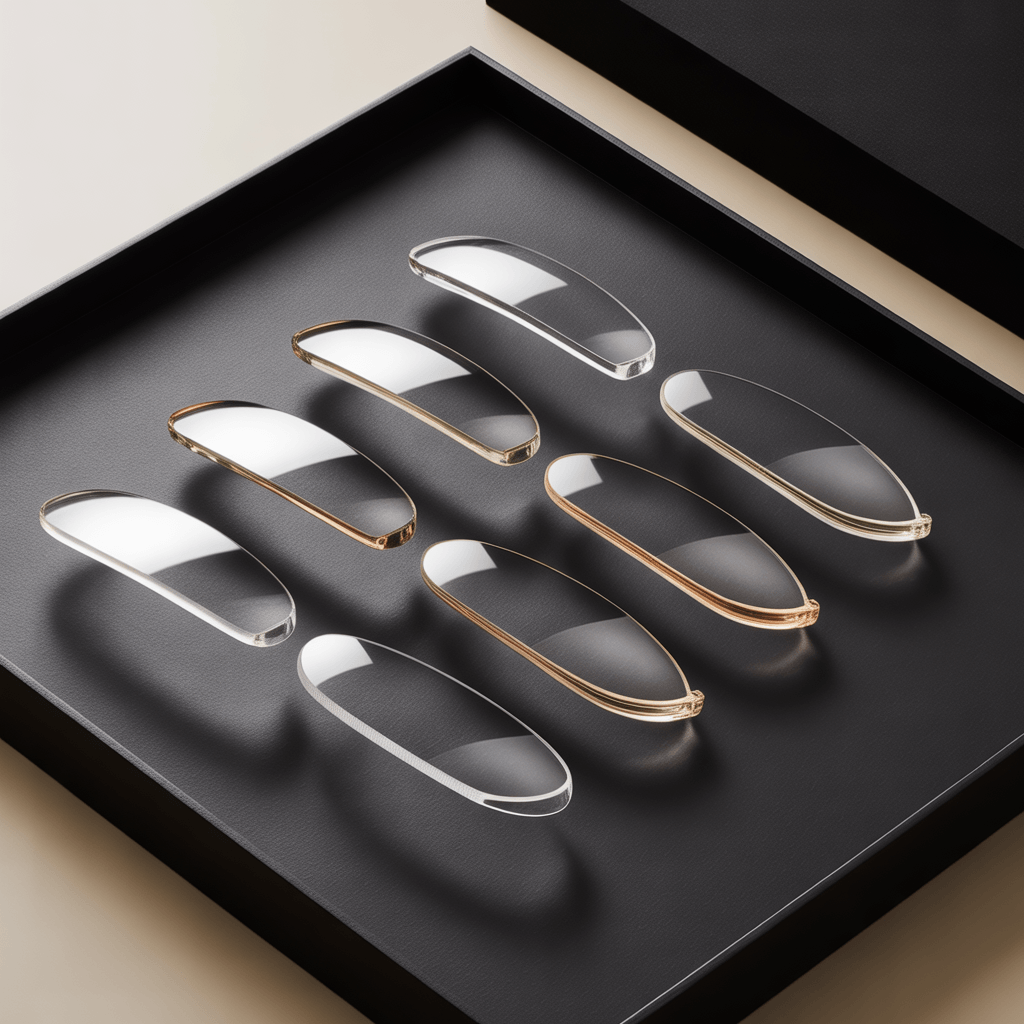
Every prescription is unique and each lens should be tailored to that individual and coupled with the frame choice.
Not sure which index is right for your prescription? Bring your prescription slip into our Dennistoun or
Cambuslang practice and we'll calculate exactly how each index option would look in your chosen frame
including predicted edge thickness before you make a decision. No pressure, no jargon.
Top 5 Eyewear Trends for 2024
Our top 5 eyewear trends for 2024 – let's dive in.
Navigating the dynamic world of eyewear can seem daunting as new trends continuously emerge. Eyewear trends mirror the styles of our era, and 2024 is shaping up to be quite interesting.
From sporty chic to eco-conscious options, delving into the latest eyewear trends is an exhilarating journey.
A myriad of noteworthy brands, such as the iconic Paul Smith, the Italian powerhouse Gucci, and the Danish lightweight marvel Lindberg to name but a few all propelling innovation at an intriguing pace.
Top Trends for 2024
1. Athleisure Eyewear: Style Meets Practical
The resurgence of wraparound shades a major 90's trend, more recently exclusive to athletes, looks like making a strong comeback in 2024.
Embraced by Gen Z and showcased in fashion shows, these frames cater to the on-the-go lifestyle.
Complete the look with smart glasses combining these shapes with photoreactive lenses, beyond a fashion statement, brands like Gucci combine functionality with a high-tech edge, offering photochromic lenses that blend style and adaptability.

Gucci 1429 S 001 a throwback to a familiar 90s icon, as seen on Travis Scott and Kim Kardashian.
2. Gradient frames gain prominence in 2024, offering a contemporary and subtly artistic approach to eyewear design.
Transitioning hues create a mesmerizing effect, injecting flair and vibrancy into any outfit. While these frames might feel daring to those accustomed to safer color choices, with the right styling, they can become a go-to accessory.
Choosing complementary gradient colors, akin to an artist selecting hues for a canvas, ensures your eyewear resonates or complements your outfit's tones.

Paul Smith exemplify sartorial elegance with this contemporary style, a fantastic example of colour gradients.
3. Bold and Functional.
A fascination with shield sunglasses has emerged in 2024, originating from sports but later captivating the fashion scene.
Similar to the wrap concept where style follows function but rooted in the flamboyant 1970s, these frames feature an iconic wraparound design resulting from advancements in lens technology.
Characterized by expansive lens areas, Shield frames make a dominant fashion statement while providing enhanced protection.

Gucci1631S
Stand out with this fashion forward shield style from Gucci as worn by Lisa Rinna.
4. Oversized Square Frames A strong trend from 2023 continues into 2024 embracing maximalism in eyewear, with oversized square frames taking center stage.
Ideal for making a bold statement, these frames complement various face shapes, ensuring both form and function are in perfect harmony.
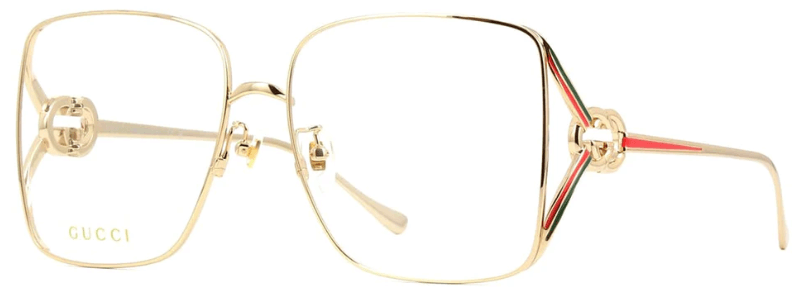
GG1321O big bold and beautiful this ovesized square frame is a timeless classic that is never out of fashion and is going to be big in 2024 in more ways than one.
5. The trend for crystal frames continues but with a twist of colour to soften the look.
The eyewear landscape now embraces a rainbow of colours, from Paul Smith’s champagne to Gucci's subtle coral lenses.
Transparent frames, low key yet stylish clear frames embody elegance in simplicity, claiming the spotlight in 2024.
Evident in a rising interest noted by eyewear specialists, clear frames gracefully adapt to all skin tones through cold and warm tints. Perfect for accentuating facial features or makeup without overshadowing, these frames come in various styles, offering adaptability and style.

Paul Smith maintain the transparent aesthetic but add a touch of sophistication with this light grey and amber tint making the frame a better fit for cooler skin tones than a clear crystal.
Make an appointment today to have a frame style consultation at one of our stores where we will be delighted to help you find the perfect style to complete your look. Our optometrist will be happy to advise on how to pair the perfect lens choices with your frames to give the best possible finish and maintain clear and comfortable vision.

First Blog Post
We are delighted with the fit out of our new practice in Dennistoun.
Hats off to Coco Zheng for the fantastic concept, design and project management!
Introducing Eddie Coyle Optometrists’ Blog!
We’re thrilled to announce the launch of our blog with our inaugural post.
We are also proud to announce the opening of our new practice in Dennistoun, our new shop at 427a Alexandra Parade is ready to redefine your eye care experience.
Kudos to Coco Zheng for the amazing concept and execution of the shop fit.
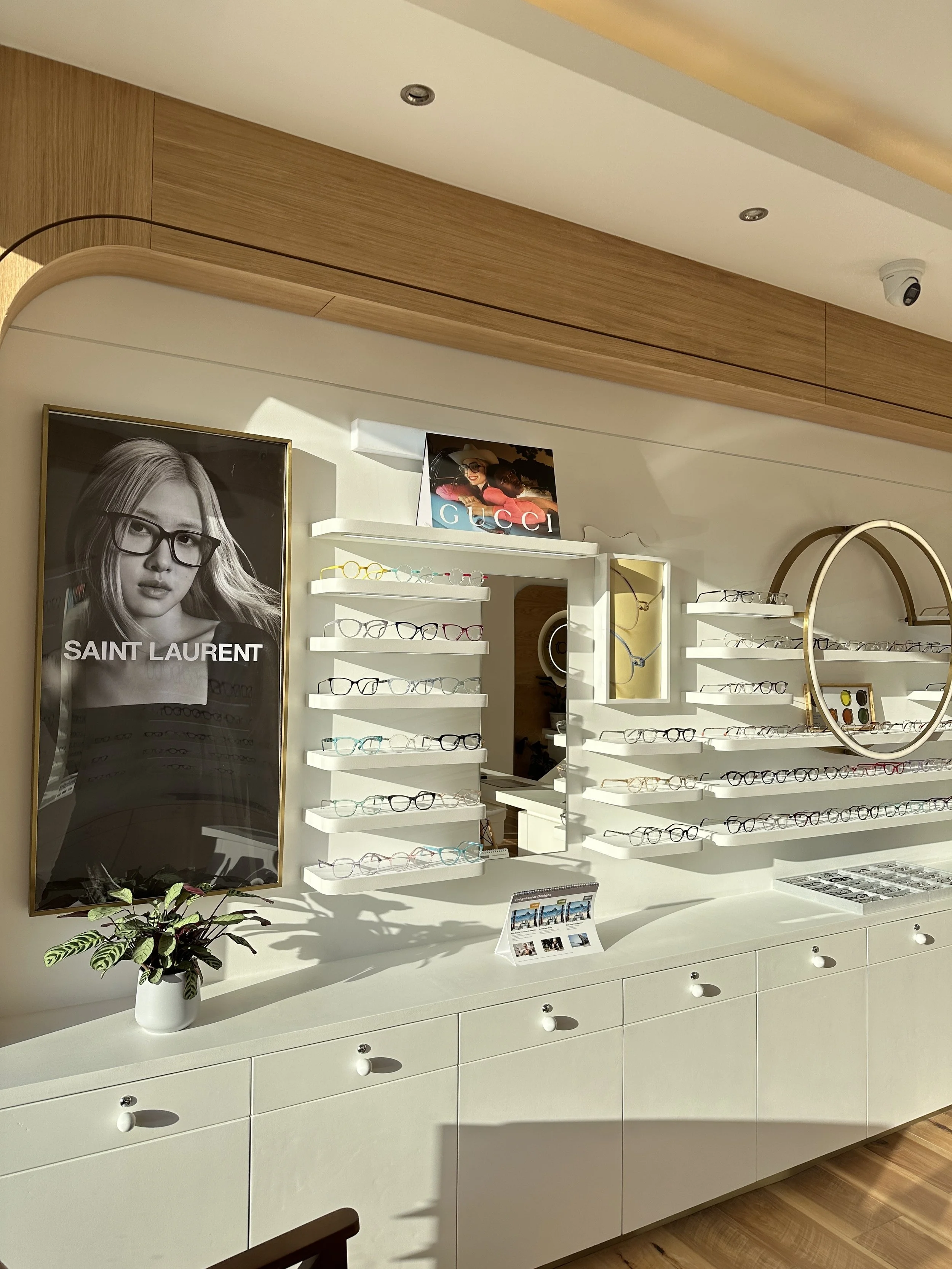
Alexandra Parade practice
Our new practice in Dennistoun is bright and contemporary providing an exemplary retail therapy experience.
This blog offers you a go-to source for the latest in Optometry and updates within our business.
Stay informed with insightful articles on advancements in Optometry, expert advice on eye health, and exclusive peeks into the world of Eddie Coyle Optometrists.
This blog is more than just updates; it’s a bridge connecting you to the evolving landscape of eye care. Join us on this journey of optical exploration, as we share valuable insights, exciting developments, and everything you need to know about keeping your vision at its best.




Your eyesight matters, and so does being in the know – welcome to the Eddie Coyle Optometrists community!