What Is PD and Why Does It Matter?
Pupillary distance is the most overlooked measurement in eyewear — and possibly the most important. Get it wrong and even a perfect prescription will make you work harder than you should. Here's what it is, how it's measured, and why you should always know yours.
By Eddie Coyle Optometrists · Glasgow
The Measurement Nobody Talks About
Your glasses prescription is a set of optical instructions. But those instructions only work if the lens is positioned correctly in front of your eye. Pupillary distance — almost always abbreviated to PD — is the measurement that makes that possible. PD is simply the distance, in millimetres, between the centre of your right pupil and the centre of your left pupil. It determines where the optical centre of each lens is positioned within the frame. The optical centre is the point on a lens that provides the clearest, most distortion-free vision — and it needs to sit directly in front of your pupil.
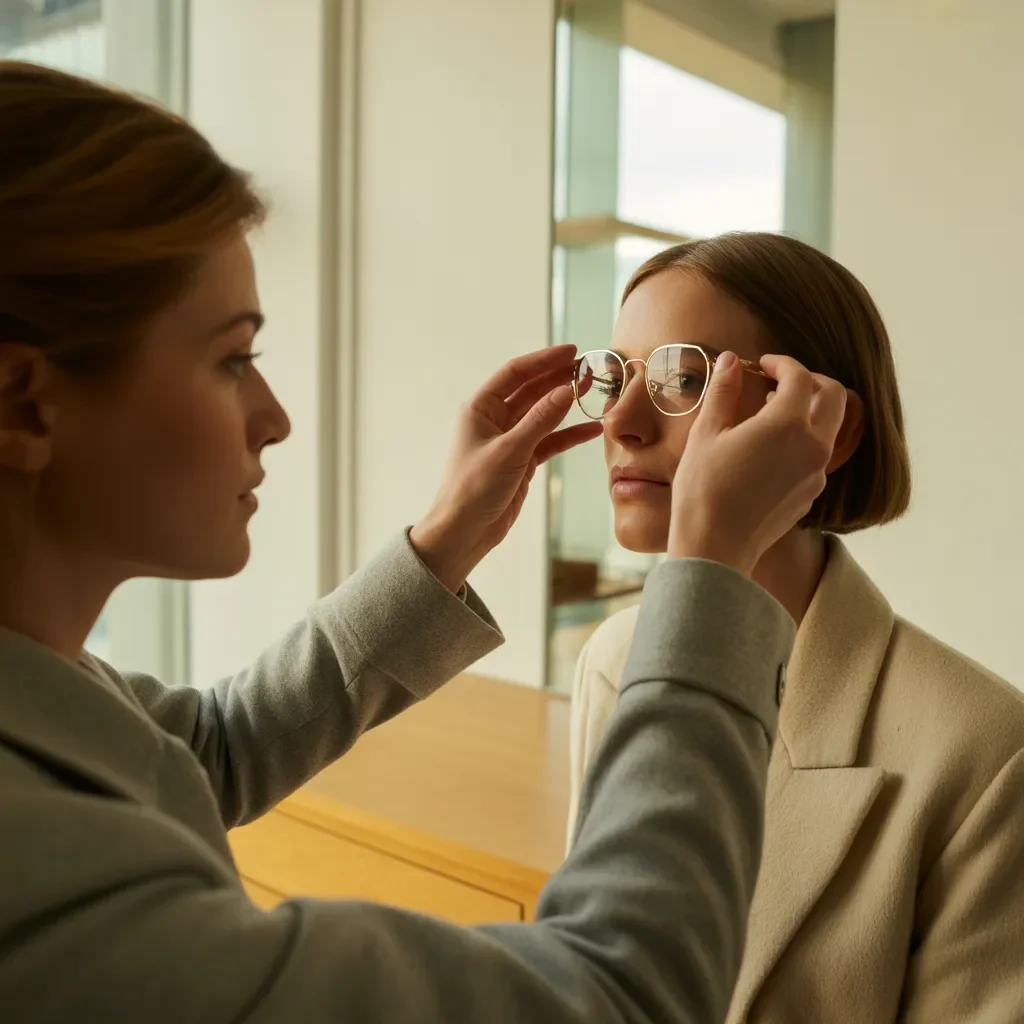
Frame size, pupillary distance and lens choice. Three variables, one goal — glasses that feel like they were made for you.
Single PD vs Dual PD
Your PD can be recorded as a single measurement (e.g., 64mm) representing the total distance across both eyes — or as two separate measurements representing each eye individually from the midpoint of the nose: e.g., 32/32mm or 33/31mm. Most faces are not perfectly symmetrical, which means the two halves of your PD are often slightly different. When ordering glasses online or using any premium online dispensing service, a dual (monocular) PD is always more accurate and always preferred.
“A lens with the optical centre 3mm off-centre is the equivalent of adding a prism to your glasses — one you never asked for.”
| Measurement | Value / Notes |
|---|---|
| Average adult PD | 60–68mm (typically 64mm) |
| Average child PD | 45–55mm (varies significantly with age) |
| Dual PD notation | Right eye / Left eye (e.g. 33/31) |
| Typical tolerance | ±1mm for distance · ±0.5mm for near/reading |
| Near vision PD | Subtract ~3mm from your distance PD (e.g. 64mm → approx. 61mm) |
What Happens If PD Is Wrong?
An incorrect PD introduces what optometrists call unwanted prism. Your eyes are sensitive instruments — when the optical centre of a lens doesn't align with your pupil, the brain has to work to compensate by rotating the eyes inward or outward. For lower prescriptions, a small PD error might go unnoticed. But as prescription strength increases, the effect becomes more significant. Common symptoms of an incorrect PD include: persistent headaches, eye strain after short periods of wear, a sense of pulling or discomfort behind the eyes, and difficulty adapting to new glasses. Many people who return new glasses reporting that they 'just don't feel right' are experiencing exactly this — and an incorrect PD is one of the first things a good dispensing optician will check.
Near Vision PD: A Separate Consideration
When you look at something close up — a book, a phone screen, a menu — your eyes naturally turn inward slightly, a movement called convergence. This means the effective PD for near tasks is smaller than for distance. For varifocal and bifocal lenses, this matters. Reading glasses typically use a PD approximately 3mm less than your distance PD (e.g., if your distance PD is 64mm, your near PD is approximately 61mm). Your optometrist will calculate this precisely when dispensing varifocals.
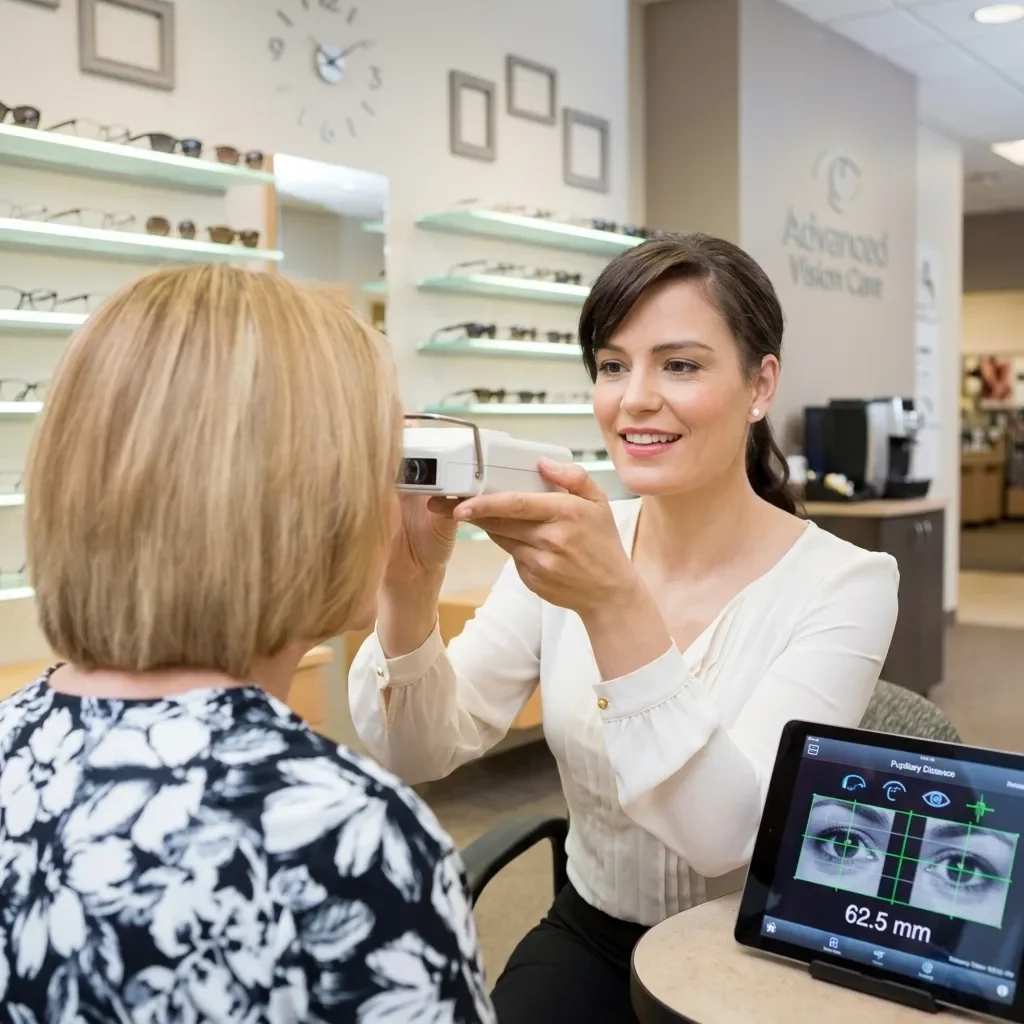
PD measurements: by hand with a ruler or using a pupillometer- both in expert hands.
Can You Measure Your Own PD?
In theory, yes — and there are apps and online tools that attempt this using your phone's front camera. In practice, self-measurement introduces errors that matter most when you can least afford them: higher prescriptions and varifocal lenses. The most reliable method is measurement by a qualified optometrist or dispensing optician using a pupillometer — a dedicated instrument designed for precisely this purpose.
At Eddie Coyle Optometrists, PD measurement is a standard part of our dispensing process and is taken at every new frame fitting.
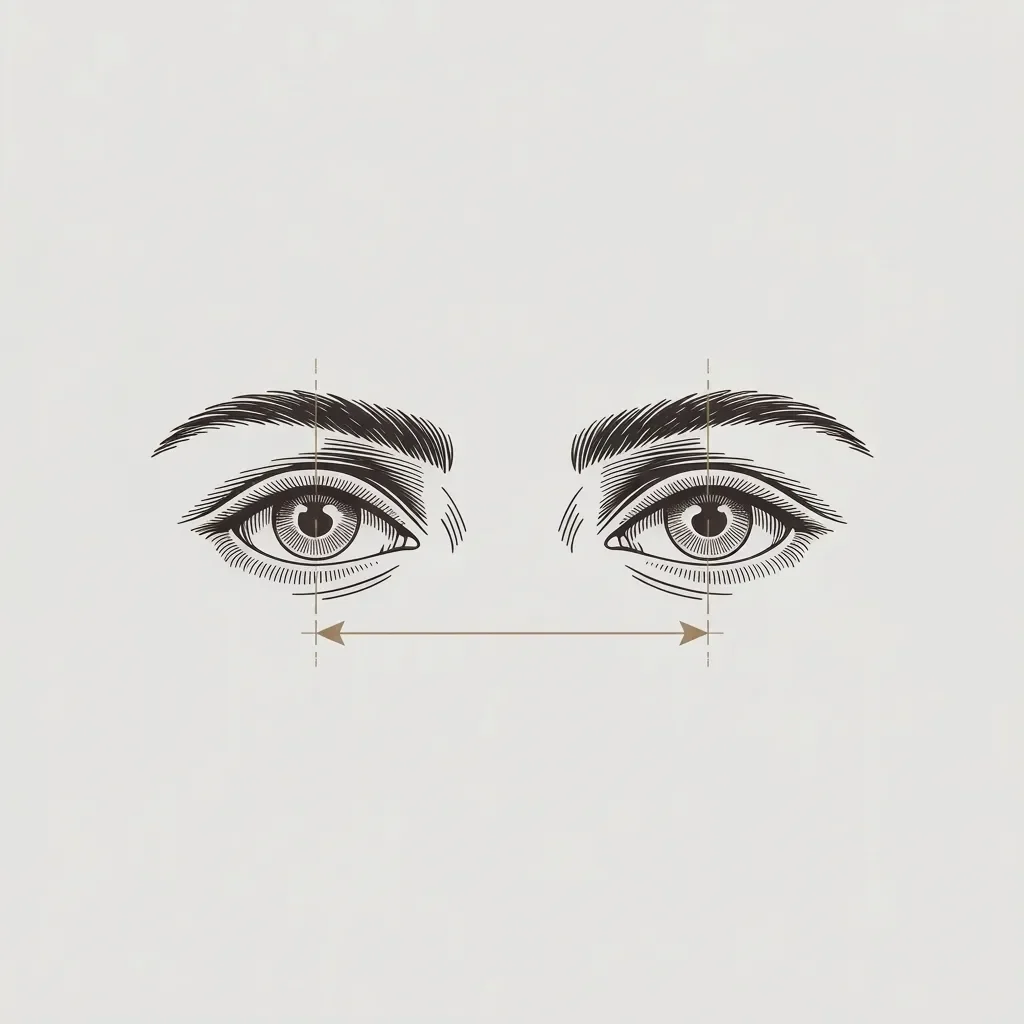
Measuring this distance looks easy but errors can easily be generated without correct technique.
PD and Online Eyewear: What You Should Know
The rise of online eyewear has made glasses more accessible and affordable — but it has also introduced a gap in the process. Many online retailers rely on customers providing their own PD, often self-measured or estimated. If you're ordering glasses online — whether from a budget retailer or a premium brand — always obtain your PD from your optometrist before you do. You have the right to request it. Some practices include it on your prescription; others may charge a small fee for the measurement if it was not taken as part of your examination. A correctly centred pair of lenses — even at a competitive online price point — will always outperform an incorrectly centred pair at any price. The PD is the foundation on which the rest of the dispensing process is built.
Need your PD measured?
Pop into either of our Glasgow practices — Dennistoun or Cambuslang. We're happy to measure your PD as part of any eye examination appointment, and we can advise on whether your current prescription is optimally centred in your existing glasses too.