
Independent Optician in Cambuslang
Local eye care from Eddie Coyle Optometrists
If you are looking for an independent optician in Cambuslang, Eddie Coyle Optometrists provides professional eye care from our practice at 132 Main Street. We aim to make every visit clear, unhurried and reassuring, whether you are arranging a routine NHS-funded eye examination, have noticed a change in your vision, or need help choosing new glasses.
Our Cambuslang practice serves adults and children from Cambuslang and the surrounding area. Appointments can be booked online or by calling 0141 643 9999. We will always try to help when a problem feels urgent, but we cannot guarantee a same-day appointment. If you experience sudden loss of vision, severe eye pain, a new shower of flashes or floaters, or an eye injury, seek urgent clinical advice rather than waiting for a routine appointment.
NHS-funded eye examinations in Scotland
People ordinarily resident in the UK can usually receive an NHS-funded eye examination in Scotland. This is a clinical assessment of your eyes and vision, not simply a check to see whether your glasses prescription has changed. Your optometrist will select the tests appropriate to your age, symptoms, eye health, medical history and findings.
An NHS-funded eye examination is separate from an NHS optical voucher. A voucher contributes towards the cost of glasses or contact lenses only for people who meet the relevant eligibility rules. Being eligible for an NHS-funded eye examination does not automatically mean that you qualify for help with the cost of eyewear. We can explain the distinction and any evidence you may need to bring, but eligibility is determined by NHS rules.
A thorough, individual eye assessment
Your appointment may include discussion of your symptoms, general health, medicines, family eye history and current glasses or contact lenses. We will assess your vision and prescription and examine the health of your eyes. Depending on your needs, this may include eye-pressure measurement, visual-field assessment, pupil dilation or other tests. Not every test is necessary for every patient.
No individual examination or scan can diagnose or exclude every eye condition. Test results must be interpreted alongside your symptoms, history and the clinical examination. If we find something that needs monitoring, further investigation or referral, we will explain what we have seen and what should happen next.
OCT eye scans
Optical coherence tomography, usually called OCT, produces detailed cross-sectional images of structures at the back of the eye. It can provide useful additional information about the retina and optic nerve and may help your optometrist document or monitor particular findings.
OCT is an additional clinical tool and does not replace professional judgement or the rest of an eye examination. Whether it is appropriate depends on the individual patient and the reason for testing. An OCT image on its own cannot diagnose or rule out every eye condition, and its findings need to be considered in clinical context.
Glasses and independent eyewear advice
Choosing glasses involves more than finding a frame you like. Comfort, fit, prescription, lens choice and how you use your vision all matter. Our team can help you compare frame shapes and materials and discuss suitable lens options without rushing the decision.
We stock a considered selection of independent and designer eyewear. Availability changes, so please contact the practice if you are looking for a particular brand or style. Recommendations are based on your prescription, measurements, visual needs and preferences; the most expensive option is not automatically the most appropriate one.
Contact lens care
Contact lenses can be a convenient alternative to glasses for suitable patients, but they require appropriate assessment, fitting and aftercare. A contact lens appointment is different from a routine eye examination. We will discuss your needs, assess suitability and explain safe wear, handling and replacement. Existing wearers should bring their current lenses or packaging where possible.
Please do not continue wearing a lens in an eye that is red, painful, unusually light-sensitive or suddenly blurred. Remove the lens and seek prompt professional advice.
Visiting our Cambuslang practice
Eddie Coyle Optometrists
132 Main Street
Cambuslang
G72 7EL
Telephone: 0141 643 9999
Opening hours: Monday to Friday 9:00am–5:30pm; Saturday 9:00am–2:00pm; Sunday closed.
Get directions to our Cambuslang practice
Book an eye examination in Cambuslang
You can book through our online appointment system or telephone the Cambuslang practice on 0141 643 9999. Choose the appointment type that best matches your reason for attending and tell us about any new or urgent symptoms. We cannot guarantee same-day availability, but clear information helps us advise you appropriately.
Frequently asked questions
Are eye examinations free in Scotland?
NHS-funded eye examinations are generally available in Scotland to people ordinarily resident in the UK, subject to NHS eligibility and frequency rules. This does not automatically entitle everyone to an NHS optical voucher towards glasses or contact lenses.
How often should I have an eye examination?
The appropriate interval depends on your age, eye health, symptoms, medical history and previous findings. Your optometrist will recommend a recall period for you. Arrange advice sooner if your vision changes or you develop new symptoms.
Do I need an OCT scan at every visit?
No. OCT can provide valuable additional information, but it is not necessary for every patient at every appointment. Your optometrist will advise whether it may be useful in your circumstances.
Can an OCT scan confirm that my eyes are healthy?
An OCT scan shows detailed images of particular eye structures, but no individual scan can diagnose or exclude every eye condition. It must be interpreted with your history, symptoms and other examination findings.
Can I get a same-day appointment?
We will try to help when an eye problem is urgent, but we cannot guarantee a same-day appointment. Call 0141 643 9999 and describe your symptoms. Sudden vision loss, severe pain or significant injury requires urgent assessment.
Can I book for my child?
Yes. Children can have NHS-funded eye examinations in Scotland. If you have concerns about a child’s vision, eye alignment, headaches or schoolwork, tell us when booking so the practice can arrange the appropriate appointment.
What should I bring?
Bring your current glasses, details of any contact lenses, and a list of medicines if relevant. If you are asking about NHS voucher support, bring any documentation needed to demonstrate eligibility.
Clinical information reviewed September 2026. General information only; it does not replace individual advice from an optometrist or other healthcare professional. NHS information checked against NHS Inform, last updated 1 April 2026.
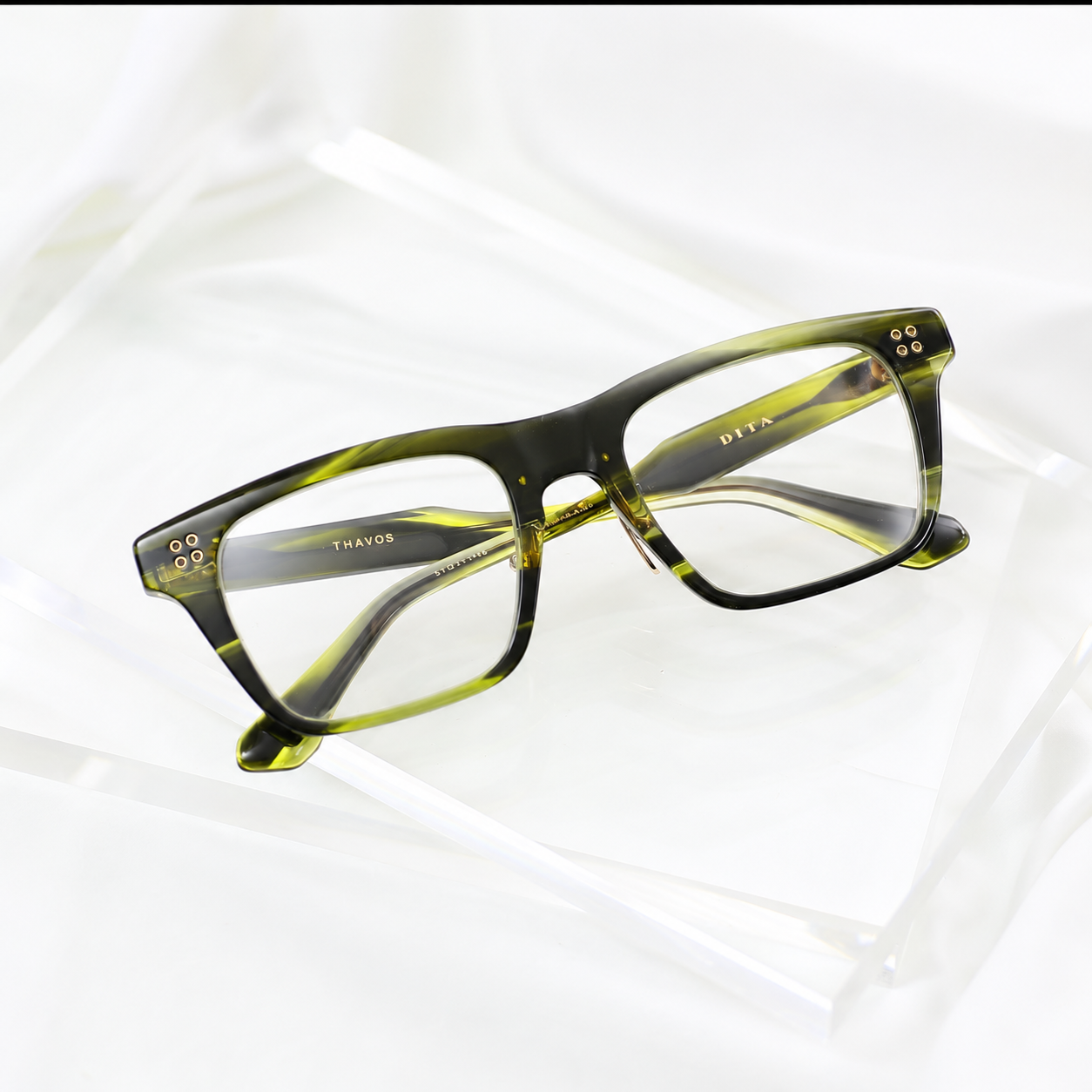
Acetate & plastic frames
Colour with depth.
Bold outlines, subtle translucency or an easy everyday feel. The material makes a difference to both the look and the fit.

From sheet to frame
How acetate is made.
Cellulose acetate starts with cellulose from sources such as cotton linters or wood pulp. It is processed with ingredients that give it colour, flexibility and workability.
Traditional sheet-acetate frames are cut or milled from coloured sheets, then shaped, smoothed and polished. Layers and patterns create depth through the material, from classic tortoiseshell to translucent tones.
A different approach
Moulded plastics.
Many thermoplastic frames are made by injecting softened material into a precision mould. Materials such as TR90 can make light, flexible frames with a more relaxed or sporty feel.
They offer a different balance of weight, flexibility and finish. Adjustment methods vary, so we’ll help you choose a design that sits comfortably from the start.
Benefits you can feel
Shape, colour and comfort.
Acetate allows substantial shapes, a smooth polished feel and a wide choice of colours. Its front can also help disguise the edge of some thicker lenses.
Flexible moulded frames can suit people who prioritise low weight. Neither material guarantees a good fit on its own: bridge shape, frame size and the finished lenses all matter.
Signs of quality
Look beyond the label.
- Smooth edges and an even finish around the rims and bridge.
- Hinges that open smoothly, without unwanted sideways play.
- Neat joins and firmly seated hinge fittings.
- Lenses held securely, with no visible gaps in the rim.
- A bridge that rests comfortably and sides that do not pinch.
Different expressions
Find your own balance.
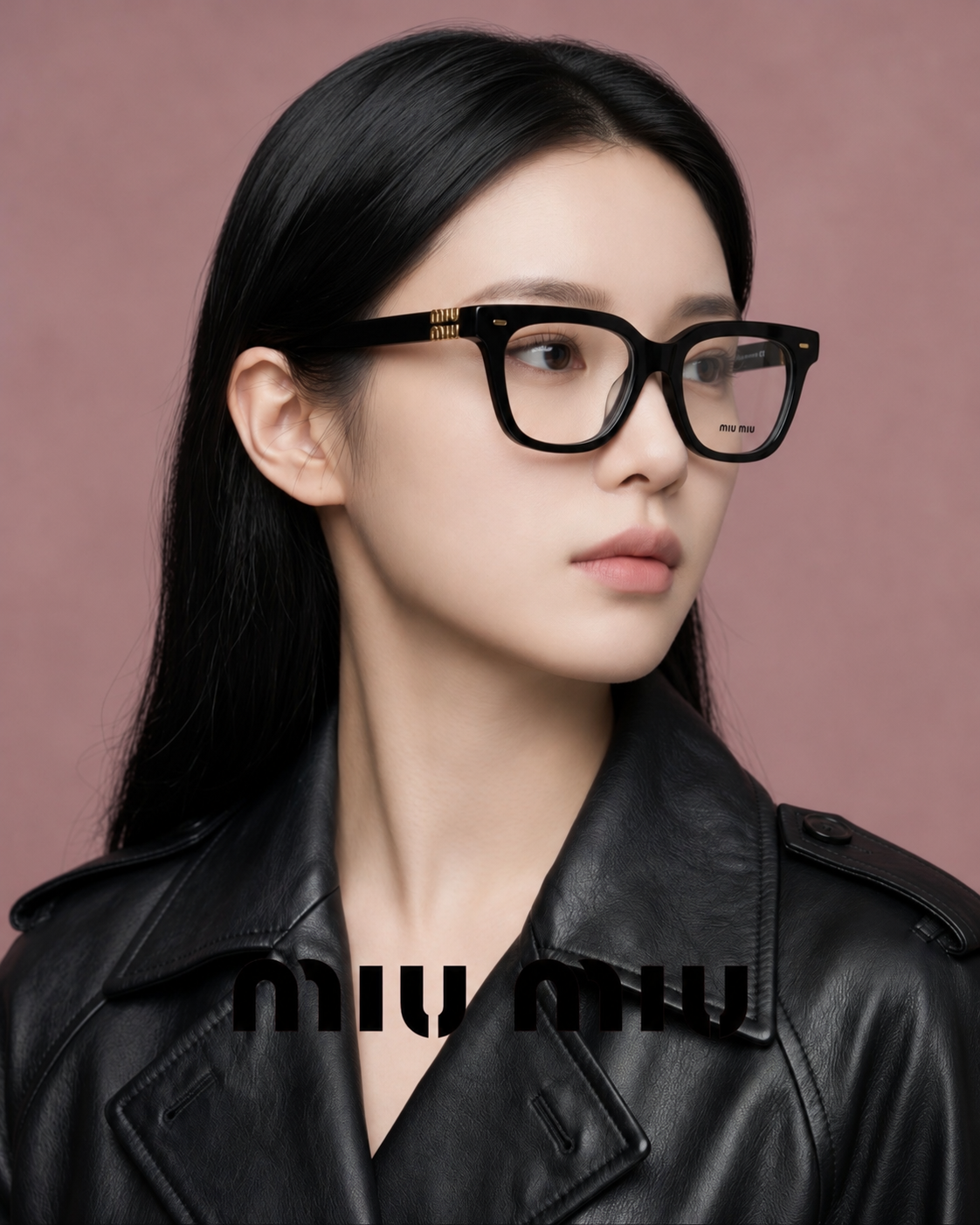


Tell us about any known material sensitivities. We’ll consider the whole frame, including its hinges, inserts and other parts that may contact the skin.